
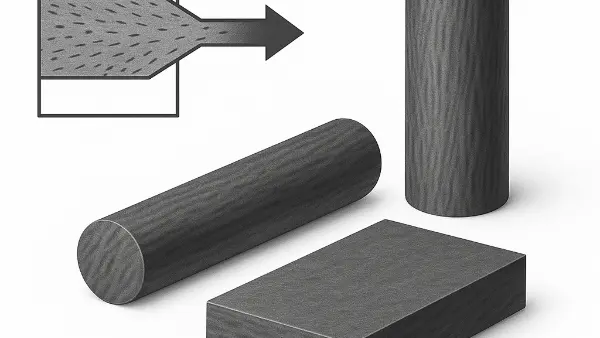
Extruded graphite
Extrusion and graphitization — rods, tubes and profiles
Extruded graphite is technical graphite produced by extrusion and graphitization, supplied as rods, tubes, profiles and blocks for constant-section parts. It combines thermal and electrical conductivity with dimensional stability at elevated temperature — the usual choice when the section is constant, loads are moderate, and process anisotropy is acceptable.
What it is used for: heating elements and furnaces, continuous casting and dies, degassing/fluxing lances and tubes, crucibles and ingot molds, molds, contacts and thermal profiles. For rod or tube cuts without a finished part, cut to size; for machined geometry, graphite machining.
The typical ranges in the technical panel cover medium-grain industrial grades (≈0.25–0.8 mm). The exact value is confirmed at quote according to diameter, grain orientation and application.
Inventory and machining in García, N.L., with shipments to Mexico and the Americas.
Properties and grain orientation
Extrusion aligns the grain: with-grain (∥) properties usually show higher conductivity and flexural strength than against-grain (⊥). When designing lances, tubes and heating elements, the critical orientation must be stated.
| Property | Typical range (family) |
|---|---|
| Apparent density | 1.57–1.78 g/cm³ |
| Open porosity | 15–28 % |
| Flexural strength | 7–23 MPa |
| Thermal conductivity | 100–190 W/m·K |
| Grain size | 0.25–0.8 mm |
| Ash content (industrial grades) | ≈0.08–0.2 % |
Typical industrial service runs around 1.72–1.75 g/cm³ and 130–190 W/m·K; more porous or denser series are available depending on the duty.
Formats and typical parts
| Format | Common use |
|---|---|
| Rods / rounds | Electrodes, heating elements, stock for machining |
| Tubes | Fluxing, degassing, heat exchangers |
| Profiles / blocks | Dies, molds, plates and ingot molds |
| Mini-rods | Contacts, small constant-section parts |
Optional treatments (anti-oxidation, impregnation) extend life in aluminum baths and corrosive gases.
[ Other materials for different uses ]
Discover other recommended materials
[ Where it is used ]
Typical applications for this family.
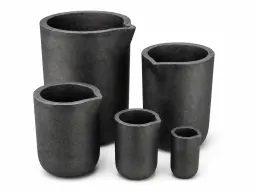 Foundry cruciblesGraphite crucibles for containing and melting metals in foundry and laboratory use.
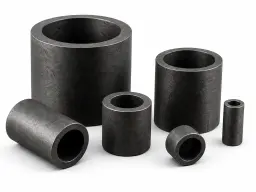 Machine bushings and spacersThey reduce friction and wear on moving components in high-temperature and demanding atmospheres.
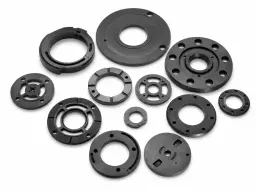 Pump mechanical sealsThey guarantee efficient sealing in mechanical systems subjected to high pressures and temperatures.
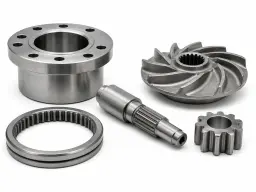 Sintering moldsThey allow the compaction and formation of metal parts through sintering processes.
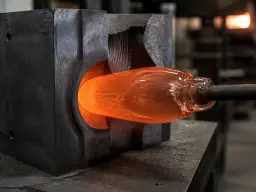 Blown-glass moldsThey allow the formation of glass pieces through blowing processes.
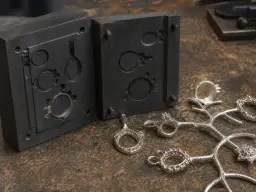 Jewelry casting moldsThey are used to shape jewelry pieces in casting processes.
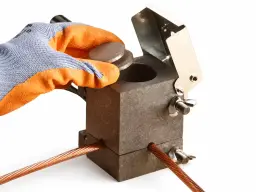 Exothermic welding moldsThey facilitate the joining of metals through controlled exothermic reactions.
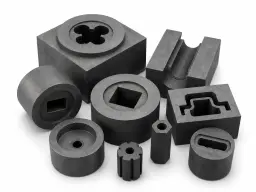 Extrusion diesGraphite dies for extrusion, forming and high-temperature metallurgical processes.
[ Advantages ]
- High thermal and electrical conductivity
- Natural formats in rod, tube and profile
- Good machinability in constant sections
- Industrial and anti-oxidation grades for metallurgy
[ Build to print ]
Any grade in this family can also be delivered as a finished part: we machine to your drawing, sample or 3D model. Tolerances, impregnation and finish are confirmed in technical review.
[ FAQ ]
View all FAQs[ Quote ]
Need the right specification—not just material?
Tell us your application. Engineering response in under 24 hours.