
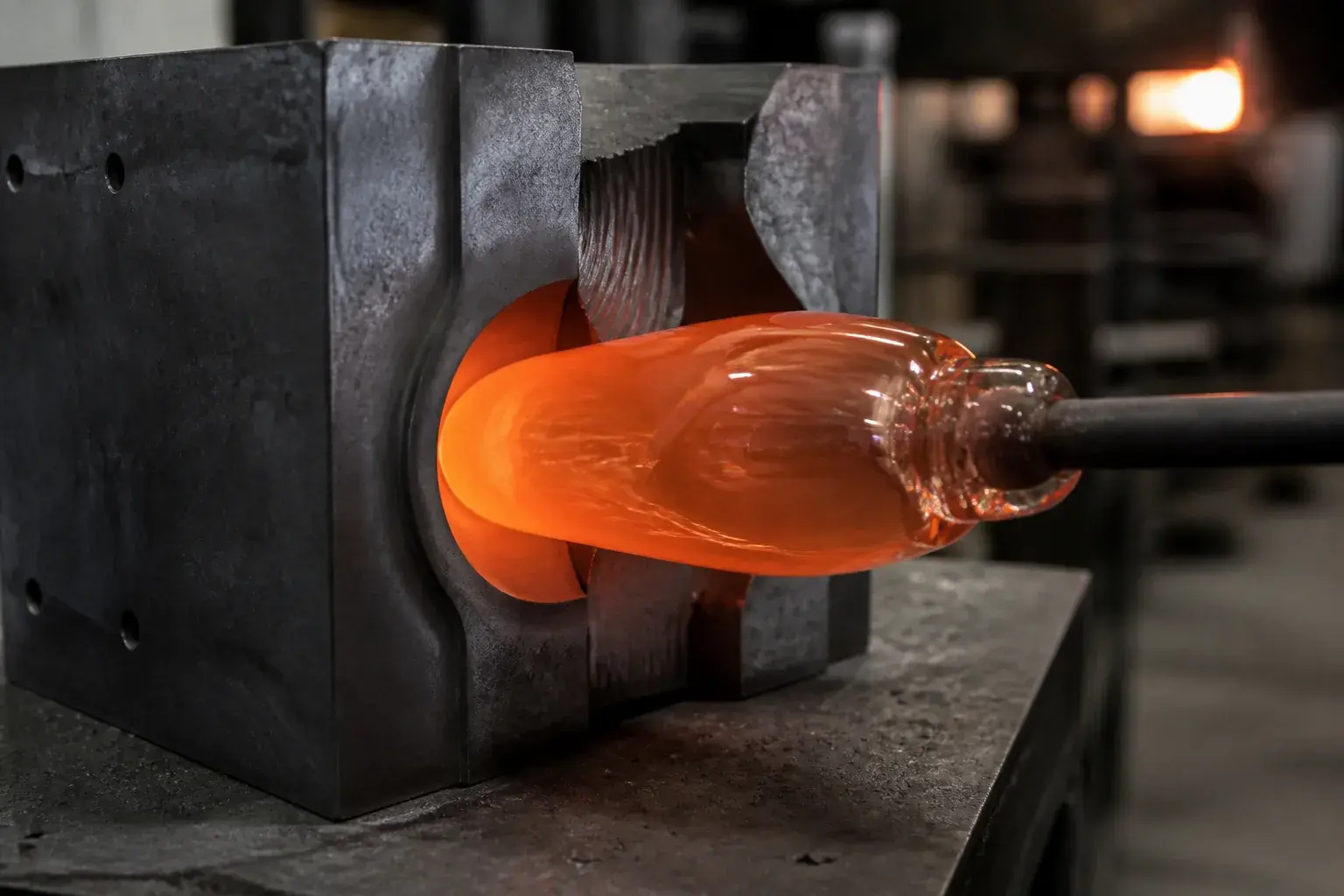
Blown-glass molds
Glass forming mould
Also known as: Graphite moulds for glass · Glass blowing moulds · Hot glass forming moulds · Graphite moulds for art glass
[ Technical summary ]
In hot glass forming, the graphite mould receives the gob or the part at a temperature where glass still flows. The governing condition is that the surface must neither stick to nor mark the glass: graphite is not wetted by the glass melt and, by conducting heat, draws temperature from the contact face without chilling as abruptly as a metal mould. It is used in blown, pressed, and custom-formed glass.
[ Problem it solves ]
Shape hot glass without it sticking to the mould or being marked, in a contact where the mould surface directly defines the finish of the part.
Operating conditions
- High temperature
- Contact with molten metal or glass
When it is suitable
- Glass is formed hot and touches the mould surface
- The glass finish cannot show mould marks
- The geometry is proprietary and machined to drawing or sample
- Short runs or art pieces are produced
When it may not be suitable
- The part is left in hot air during stoppages, with no protection
- The mould takes impact or high clamping load on every cycle
- The cycle cools the mould with water immediately after contact
Process challenges
- Adhesion / sticking
- Thermal shock
- Surface wear
Advantages
- Low adhesion
- Thermal stability
- Custom machining
Limitations
- Wear from erosion and thermal shock
- Possible metal contamination if the grade is unsuitable
- Service life depends on cycles and metal flow
[ Critical selection variables ]
These variables define the grade and the geometry. Actual values are confirmed against the grade datasheet.
- Operating temperatureDecisive
- Glass compositionDecisive
- Surface finish required on the partDecisive
- Geometry and tolerancesDecisive
- Heat-extraction rateRelevant
- Thermal and duty cyclingRelevant
- Thermal shock severityRelevant
[ Required material properties ]
Properties that guide selection. Numerical values come from each grade's datasheet.
Critical properties
- Thermal shock resistance
- Dimensional stability
- Thermal conductivity
- Non-wetting by molten metal
Secondary properties
- Grain size
- Machinability
- Bulk density
[ Related ]
Products
Industries
Related applications
[ Frequently asked questions ]
View all FAQsTechnical content reviewed by ESGRAF — Last reviewed: September 8, 2026
[ Quote ]
Need the right specification—not just material?
Tell us your application. Engineering response in under 24 hours.