
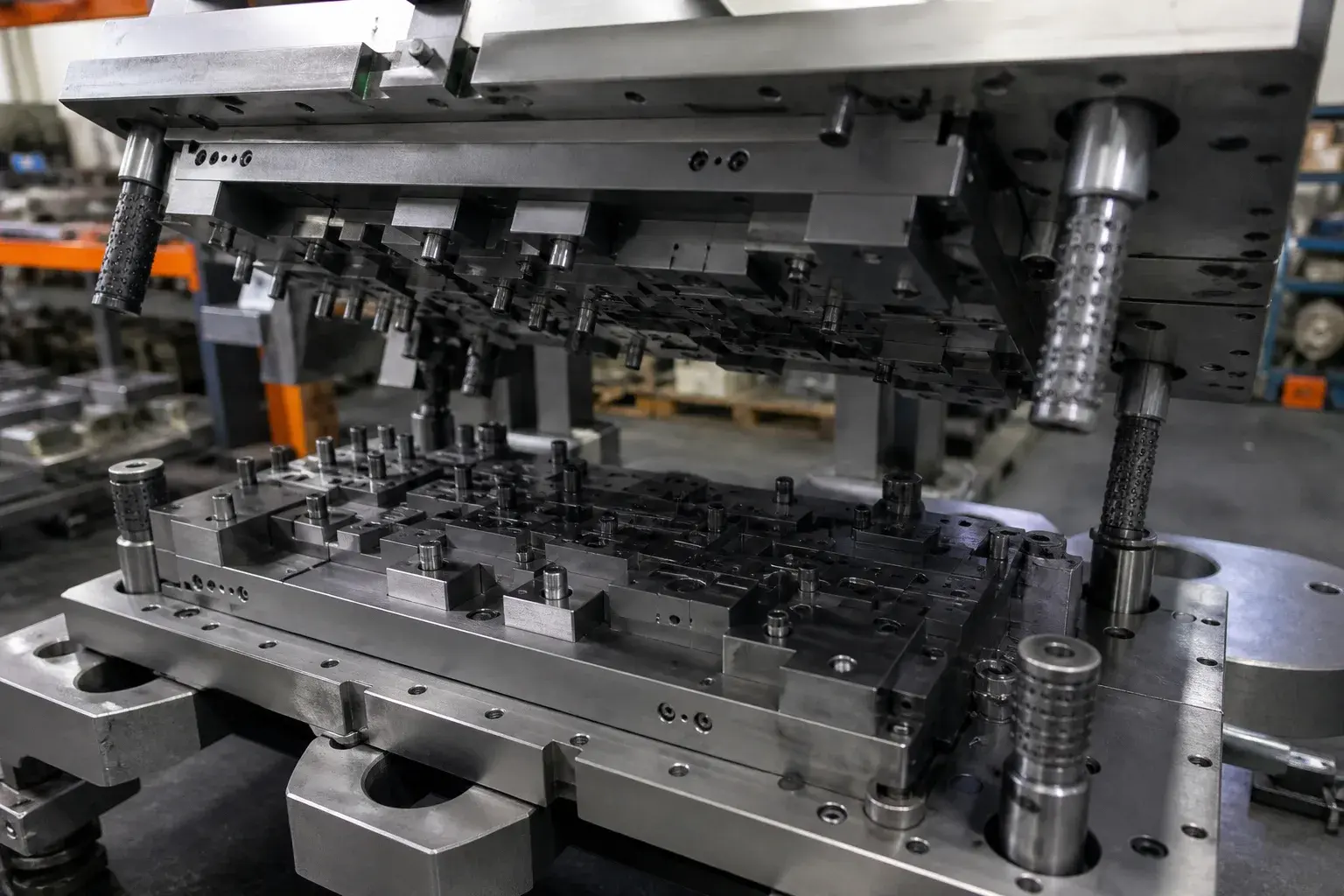
Stamping die lubrication
Stamping tool lubricant
Also known as: Graphite die lubricant · Stamping release agent · Dry film for cutting tools · Punch and die lubricant
[ Technical summary ]
In stamping, punch and die contact the material briefly but intensely, at a cadence that leaves little room to replenish lubricant. The graphite product leaves a dry film that stays on the tool between strokes, reduces cutting friction, and eases part release. It is the cold-lubrication variant applied to cutting tools, where the issue is not drawing but sticking and edge wear.
[ Problem it solves ]
Keep the cutting tool lubricated at production cadence, reducing material sticking to the punch and the edge wear that forces frequent resharpening.
Operating conditions
- Blanking / die cutting
- Stamping
- Tool lubrication
When it is suitable
- Material sticks to the punch or the die
- The edge wears sooner than expected in the run
- The cadence does not allow lubricating on every stroke
- A film that does not drip onto the stamped part is required
When it may not be suitable
- The part tolerates no black residue and there will be no later cleaning stage
- Punch-to-die clearance is out of tolerance and that is the real problem
- The product cannot be validated in the plant before adopting it in production
Process challenges
- Sticking to the tool
- Die wear
- Part defects
Advantages
- Dry film
- Reduces friction
- Improves release
Limitations
- Not a hydrodynamic oil lubricant
- May stain light-colored surfaces
- Performance depends on surface preparation and reapplication
[ Critical selection variables ]
These variables define the grade and the geometry. Actual values are confirmed against the grade datasheet.
- Material of the workpieceDecisive
- Application methodDecisive
- Machine cycle rateDecisive
- Film thicknessRelevant
- Dosage and application frequencyRelevant
- Carrier or formulation baseRelevant
[ Required material properties ]
Properties that guide selection. Numerical values come from each grade's datasheet.
Critical properties
- Lubricating film formation
- Friction coefficient
- Particle size distribution
- Self-lubrication
Secondary properties
- Wear resistance
- Dispersibility
[ Related ]
Materials
Products
[ Frequently asked questions ]
View all FAQsTechnical content reviewed by ESGRAF — Last reviewed: September 8, 2026
[ Quote ]
Need the right specification—not just material?
Tell us your application. Engineering response in under 24 hours.