
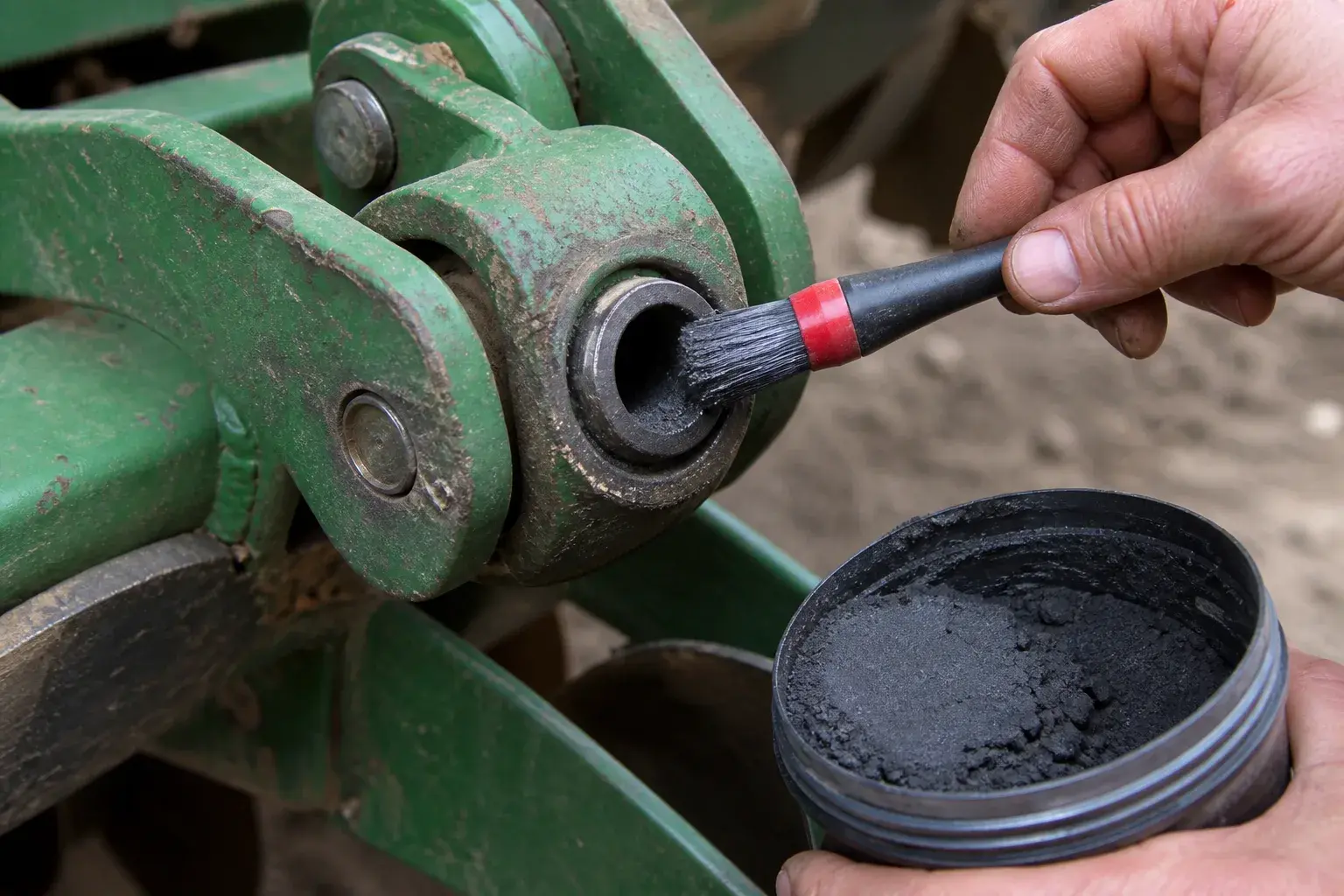
Agricultural machinery lubrication
Field machinery lubrication
Also known as: Graphite lubricant for agricultural machinery · Dry lubrication for farm implements · Anti-friction for field linkages · Lubricant for dust-exposed equipment
[ Technical summary ]
Agricultural machinery works surrounded by dust and mud, conditions in which grease becomes the vehicle that carries soil into the joint. The result is abrasive wear at exactly the points you meant to protect. A graphite lubricant leaves a dry film that does not retain particles, and applying it in the field is straightforward — which matters for equipment serviced far from the workshop and between working days.
[ Problem it solves ]
Lubricate joints exposed to dust and mud without the lubricant carrying soil into the contact and accelerating abrasive wear.
Processes
- Shaft and joint lubrication
- Field maintenance
Operating conditions
- Dusty environment
When it is suitable
- Greased joints accumulate dust and mud
- Wear appears despite keeping to the greasing schedule
- Equipment is serviced in the field, away from the workshop
- Grease is lost to washing or to the weather
When it may not be suitable
- The point is a sealed, lifetime-lubricated bearing
- The manufacturer specifies grease with particular additives for that position
- The surface tolerates no black residue and there will be no cleaning stage
Process challenges
- Dust and mud contamination
- Grease loss
- Joint wear
Advantages
- Residual dry lubrication
- Less dust attraction than greases
- Field-applicable
Limitations
- Not a hydrodynamic oil lubricant
- May stain light-colored surfaces
- Performance depends on surface preparation and reapplication
[ Critical selection variables ]
These variables define the grade and the geometry. Actual values are confirmed against the grade datasheet.
- Presence of abrasives or solidsDecisive
- Application methodDecisive
- Humidity and ambient conditionsRelevant
- Load and its distributionRelevant
- Reapplication frequencyRelevant
- Operating temperatureRelevant
[ Required material properties ]
Properties that guide selection. Numerical values come from each grade's datasheet.
Critical properties
- Lubricating film formation
- Friction coefficient
- Particle size distribution
- Self-lubrication
Secondary properties
- Wear resistance
- Chemical resistance
[ Related ]
[ Frequently asked questions ]
View all FAQsTechnical content reviewed by ESGRAF — Last reviewed: September 8, 2026
[ Quote ]
Need the right specification—not just material?
Tell us your application. Engineering response in under 24 hours.