
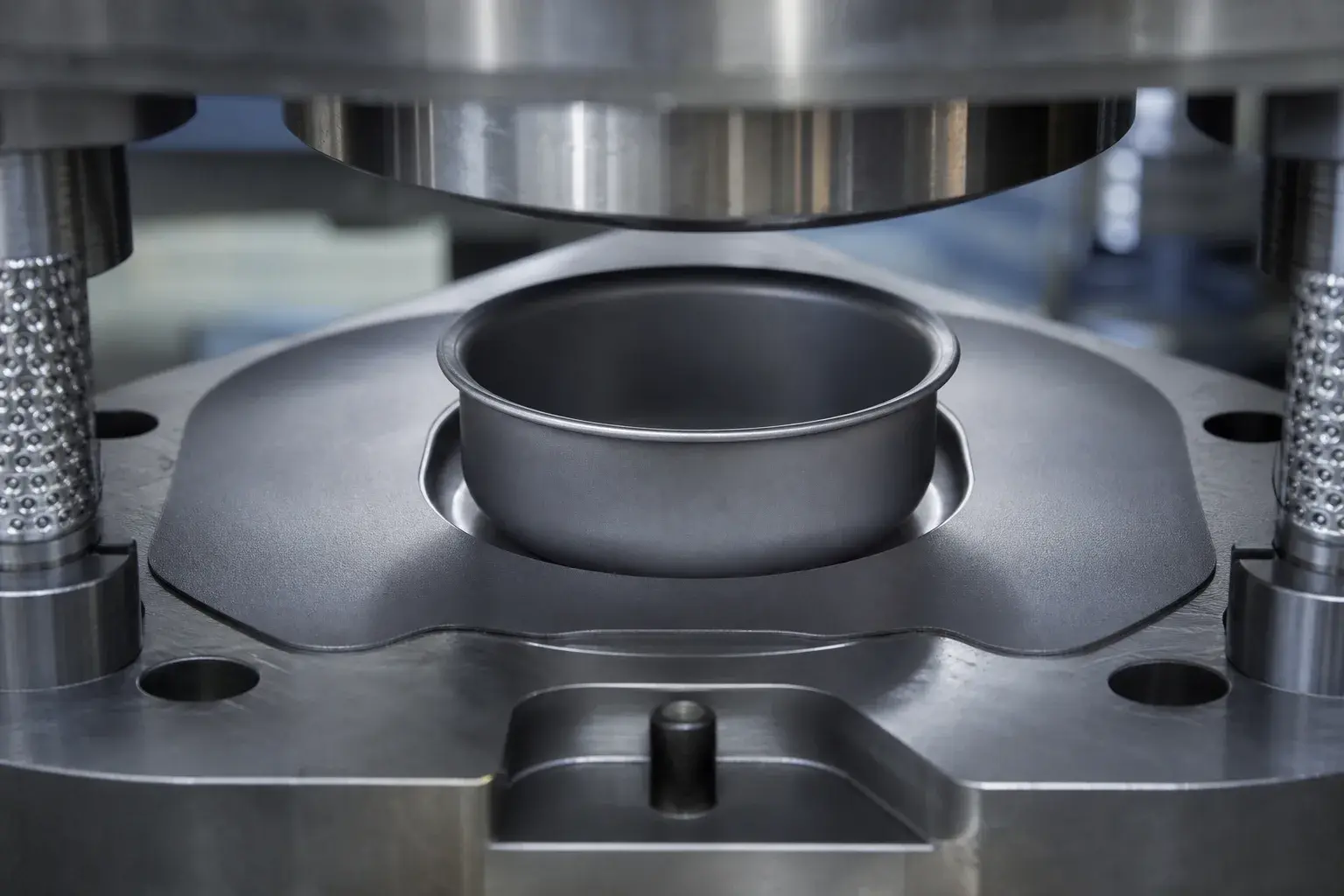
Deep-drawing lubrication
Cold deep-drawing release lubrication
Also known as: Dry release agent for deep drawing · Graphite lubricant for deep forming · Dry film for sheet drawing · Drawing-die lubricant
Dry graphite film for cold deep drawing.
[ Technical summary ]
In deep drawing the sheet travels a long path against die and punch. An oil can stain or evaporate; a dry graphite film lubricates that path and acts as a release agent. Stamping and blanking are neighbouring uses; hot forming is a separate record. Alloy, thickness, and drawing depth are set by the press.
Each process needs a specific product and application method. ESGRAF selects the solution according to temperature, material, load, cycle, and application method.
[ Problem it solves ]
Avoid sticking and marks in deep drawing without an oil that stains or is displaced.
Processes
- Cold deep drawing
- Sheet forming
Operating conditions
- Cold forming
- High sheet deformation
When it is suitable
- The sheet sticks to die or punch
- There are marks or tears in deep drawing
- A dry release agent in the cold is required
When it may not be suitable
- The process requires a drawing oil specified by the end customer
- The part tolerates no black residue and there will be no wash
- The surface tolerates no black residue and there will be no cleaning stage
Process challenges
- Sticking on die and punch
- Marks on the sheet
- Tearing from lack of lubrication along the path
Advantages
- Dry film that is not displaced like an oil
- Reduces marks and sticking in drawing
- Eases cold release
Limitations
- May leave black residue that needs washing
- Does not replace die and punch design
- Performance depends on film thickness
[ Critical selection variables ]
These variables define the grade and the geometry. Actual values are confirmed against the grade datasheet.
- Material of the workpieceDecisive
- Pressing pressureDecisive
- Film thicknessDecisive
- Application methodRelevant
- Surface finish required on the partRelevant
- Counterface material and finishRelevant
[ Required material properties ]
Properties that guide selection. Numerical values come from each grade's datasheet.
Critical properties
- Lubricating film formation
- Friction coefficient
- Self-lubrication
- Thermal stability
Secondary properties
- Wear resistance
[ Related ]
[ Frequently asked questions ]
View all FAQsTechnical content reviewed by ESGRAF — Last reviewed: October 28, 2026
[ Quote ]
Need the right specification—not just material?
Tell us your application. Engineering response in under 24 hours.