
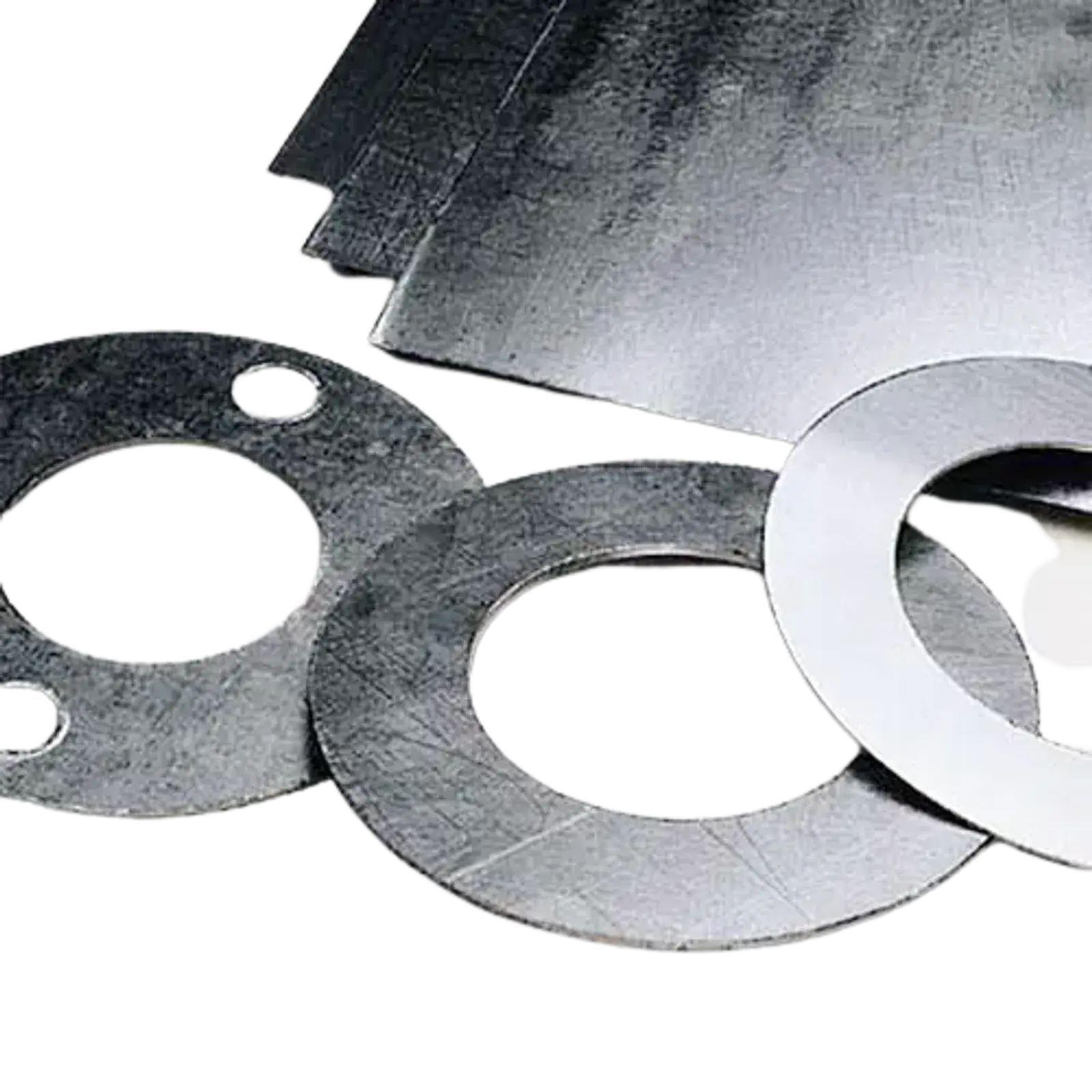
Sealing monoblock gaskets
Static sealing gasket
Also known as: Graphite flange gaskets · Monoblock graphite gaskets · Die-cut flexible graphite gaskets · Graphite gaskets for static joints
[ Technical summary ]
A monoblock gasket is a single piece of flexible graphite, with or without reinforcement, cut to the flange geometry. Being neither layered nor binder-based, it does not show the cold flow and progressive hardening that make other soft gaskets fail after several thermal cycles. It seals by conforming under bolt load, copying the flange face, and holds that conformation as long as the seating stress is maintained.
[ Problem it solves ]
Keep a flange sealed across thermal cycles, without the progressive relaxation and hardening that force retightening or replacement of conventional gaskets.
Processes
- Flange sealing
- Static sealing
Operating conditions
- High temperature and pressure
When it is suitable
- The flange runs thermal cycles and the gasket relaxes between them
- Temperature exceeds the elastomer and fibre-gasket range
- The flange geometry does not match a standard gasket
- The process medium chemically degrades conventional gaskets
When it may not be suitable
- The process medium is a strong oxidizer and compatibility has not been verified
- The seal is exposed to hot air on its outer face without protection
- The flange cannot reach or maintain the required seating stress
Process challenges
- Flange leaks
- Cold flow of soft gaskets
- Thermal cycles
Advantages
- Thermal stability
- Formability
- Grades for different media
Limitations
- Does not replace metals in high-load structural seals without proper design
- Oxidation in air at high temperature
- Chemical compatibility of the medium
[ Critical selection variables ]
These variables define the grade and the geometry. Actual values are confirmed against the grade datasheet.
- Gasket seating stressDecisive
- Operating temperatureDecisive
- Fluid or medium in contactDecisive
- Differential pressureDecisive
- Joint and housing designRelevant
- Bolt load and tightening sequenceRelevant
- Flatness and surface finishRelevant
- Thermal and duty cyclingRelevant
[ Required material properties ]
Properties that guide selection. Numerical values come from each grade's datasheet.
Critical properties
- Compressibility
- Impermeability
- Thermal stability
- Chemical resistance
Secondary properties
- Compressive strength
- Bulk density
[ Related ]
Products
Related applications
[ Frequently asked questions ]
View all FAQsTechnical content reviewed by ESGRAF — Last reviewed: September 8, 2026
[ Quote ]
Need the right specification—not just material?
Tell us your application. Engineering response in under 24 hours.