
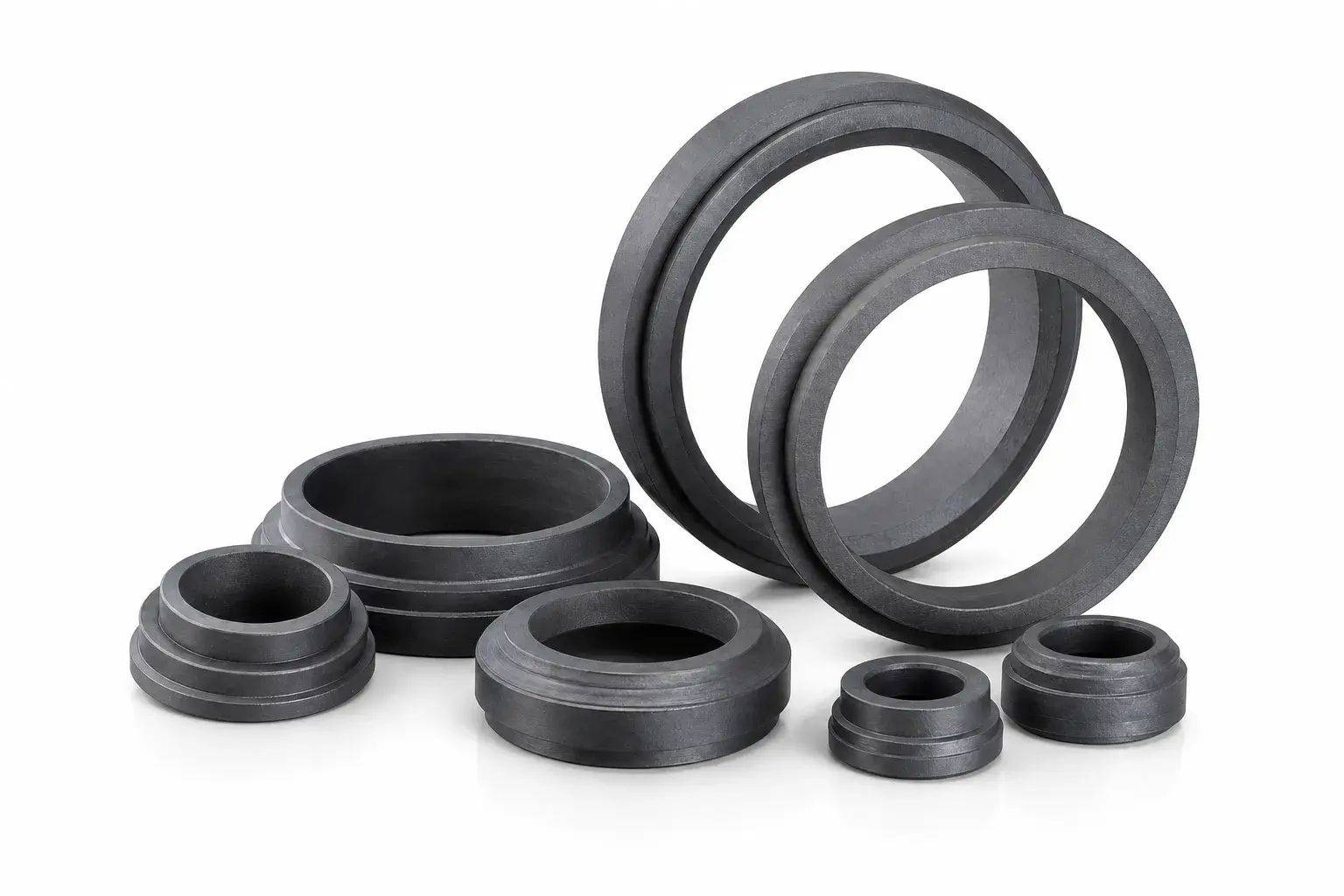
Valve stem seals
Process valve seal
Also known as: Graphite valve seals · Valve stem packing · Valve seat gaskets · High-temperature valve sealing
[ Technical summary ]
A process valve has two leak paths: the stem, which moves, and the body and bonnet joints, which are static. Graphite seals address both with the same base material, which simplifies selection when the valve works beyond the elastomer range. Sealing without depending on elasticity and with no binder to degrade, the assembly maintains closure through cycling and through the temperature swings of the service.
[ Problem it solves ]
Keep a valve tight through cycling and temperature swings, addressing both the moving stem seal and the static body joints with the same material.
Processes
- Seat valves
- Process valves
Operating conditions
- High temperature
When it is suitable
- The valve operates beyond the elastomer temperature range
- There is leakage at the stem or the body-to-bonnet joint
- Valve cycling relaxes conventional seals
- The process fluid chemically attacks the existing seals
When it may not be suitable
- The process medium is a strong oxidizer and compatibility has not been verified
- The stem or seat is damaged and is not reconditioned
- The seal is exposed to hot air on its outer face without protection
Process challenges
- Seat/packing leakage
- Cycling wear
- Aggressive media
Advantages
- High-temperature sealing
- Low friction
- Broad chemical compatibility
Limitations
- Does not replace metals in high-load structural seals without proper design
- Oxidation in air at high temperature
- Chemical compatibility of the medium
[ Critical selection variables ]
These variables define the grade and the geometry. Actual values are confirmed against the grade datasheet.
- Operating temperatureDecisive
- Differential pressureDecisive
- Fluid or medium in contactDecisive
- Thermal and duty cyclingDecisive
- Geometry and tolerancesRelevant
- Counterface material and finishRelevant
- Gasket seating stressRelevant
[ Required material properties ]
Properties that guide selection. Numerical values come from each grade's datasheet.
Critical properties
- Compressibility
- Impermeability
- Thermal stability
- Chemical resistance
Secondary properties
- Friction coefficient
- Wear resistance
[ Related ]
[ Frequently asked questions ]
View all FAQsTechnical content reviewed by ESGRAF — Last reviewed: September 8, 2026
[ Quote ]
Need the right specification—not just material?
Tell us your application. Engineering response in under 24 hours.