
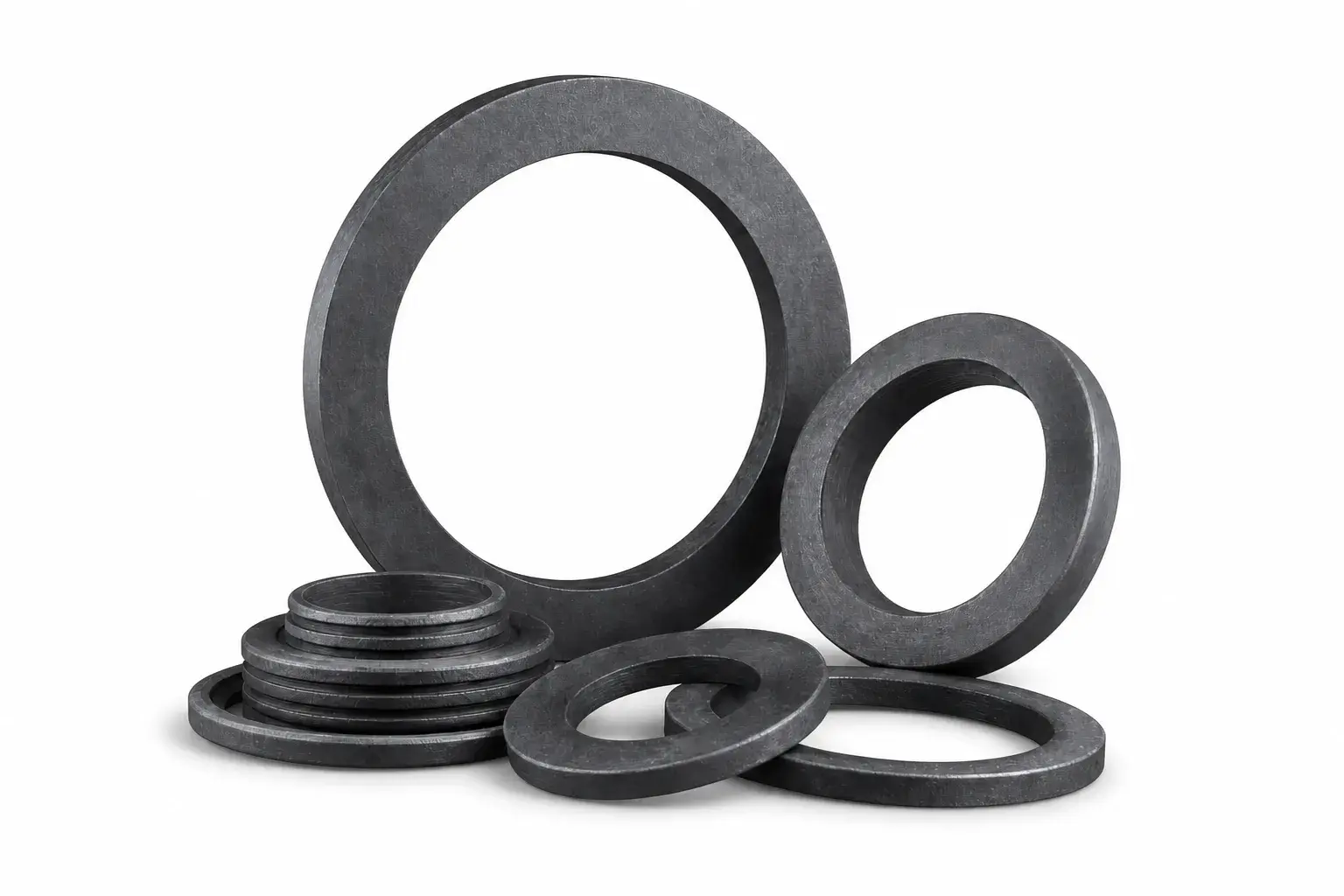
High-temperature sealing
High-temperature sealing solution
Also known as: High-temperature graphite sealing · Gaskets for furnaces and boilers · Exhaust gas seals · Thermal sealing of hot flanges
[ Technical summary ]
When service temperature rules out elastomers and binder-based gaskets, sealing is resolved with graphite. This application gathers those hot joints — furnace flanges, ducts, boilers, exhaust gas lines — where the problem is not only peak temperature but cycling: the joint expands and contracts, and the seal must follow that movement without hardening or losing conformation over time.
[ Problem it solves ]
Seal a joint that expands and contracts with the thermal cycle, using a material that neither hardens nor loses conformation because it contains no organic binder.
Processes
- Hot flange sealing
- Furnace sealing
Operating conditions
- High-temperature exhaust gases
When it is suitable
- Elastomers and fibre gaskets degrade in the service
- The joint expands and contracts with every cycle
- Leakage appears at temperature rather than cold
- Sealing must hold without frequent retightening
When it may not be suitable
- The seal is exposed to hot air on its outer face without protection
- The process medium is a strong oxidizer and compatibility has not been verified
- The joint lacks the stiffness to hold seating stress when hot
Process challenges
- Elastomer degradation
- Leaks from thermal cycling
- Oxidation
Advantages
- Thermal range above elastomers
- Specialty gaskets and packings
- Design by process condition
Limitations
- Oxidation in air at very high temperature
- Chemical compatibility of the medium
- Does not replace mechanical joint design
[ Critical selection variables ]
These variables define the grade and the geometry. Actual values are confirmed against the grade datasheet.
- Operating temperatureDecisive
- Thermal and duty cyclingDecisive
- Joint and housing designDecisive
- Fluid or medium in contactRelevant
- Differential pressureRelevant
- Gasket seating stressRelevant
- Bolt load and tightening sequenceRelevant
[ Required material properties ]
Properties that guide selection. Numerical values come from each grade's datasheet.
Critical properties
- Compressibility
- Impermeability
- Thermal stability
- Chemical resistance
Secondary properties
- Thermal expansion
- Purity
[ Related ]
Industries
Related applications
[ Frequently asked questions ]
View all FAQsTechnical content reviewed by ESGRAF — Last reviewed: September 8, 2026
[ Quote ]
Need the right specification—not just material?
Tell us your application. Engineering response in under 24 hours.