
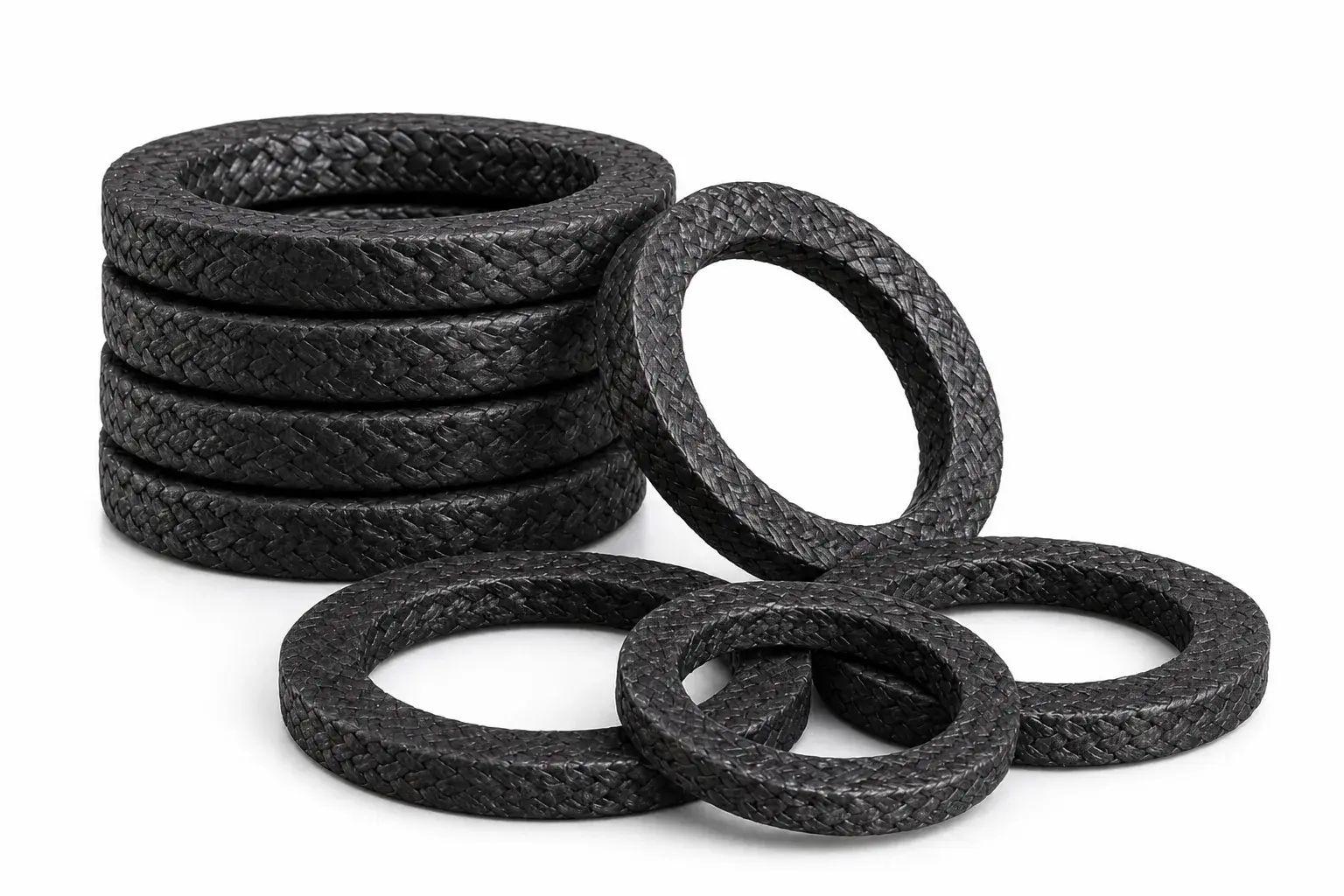
Sealing packings
Stuffing box seal
Also known as: Braided graphite packing · Stuffing box packing · Graphite gland packing · Graphite packing rings
[ Technical summary ]
Packing seals the passage of a stem or shaft through the stuffing box: the rings are compressed axially by the gland and that compression translates into radial pressure against the stem. Braided graphite is common in process valves and pumps because it combines that sealing ability with low friction on the stem, and with a thermal and chemical range where conventional packings harden and begin to leak.
[ Problem it solves ]
Contain leakage at a moving stem or shaft, without tightening the gland so much that friction blocks operation or wears the stem surface.
Processes
- Stem sealing
- Flange sealing
Operating conditions
- High temperature
When it is suitable
- The valve or pump leaks at the gland
- Conventional packing hardens at the service temperature
- Valve operating torque has risen because of packing friction
- The process medium chemically degrades fibre packings
When it may not be suitable
- The process medium is a strong oxidizer and compatibility has not been verified
- The stem is scored or corroded and is not dressed before installation
- The stuffing box is out of tolerance or misaligned
Process challenges
- Stuffing-box leaks
- Hardening of conventional packings
- Elevated temperature
Advantages
- Wide thermal range
- Good sealability
- Low friction in dynamic service
Limitations
- Does not replace metals in high-load structural seals without proper design
- Oxidation in air at high temperature
- Chemical compatibility of the medium
[ Critical selection variables ]
These variables define the grade and the geometry. Actual values are confirmed against the grade datasheet.
- Differential pressureDecisive
- Operating temperatureDecisive
- Fluid or medium in contactDecisive
- Geometry and tolerancesDecisive
- Counterface material and finishRelevant
- Sliding speedRelevant
- Thermal and duty cyclingRelevant
[ Required material properties ]
Properties that guide selection. Numerical values come from each grade's datasheet.
Critical properties
- Compressibility
- Impermeability
- Thermal stability
- Chemical resistance
Secondary properties
- Friction coefficient
- Self-lubrication
- Purity
[ Related ]
[ Frequently asked questions ]
View all FAQsTechnical content reviewed by ESGRAF — Last reviewed: September 8, 2026
[ Quote ]
Need the right specification—not just material?
Tell us your application. Engineering response in under 24 hours.