
Electrical grounding
Earthing electrode and/or conductive backfill
Also known as: Graphite grounding electrodes · Graphite earthing rods / bars · Solid graphite electrode · Graphite conductive backfill · Graphite ground enhancement material
[ Technical summary ]
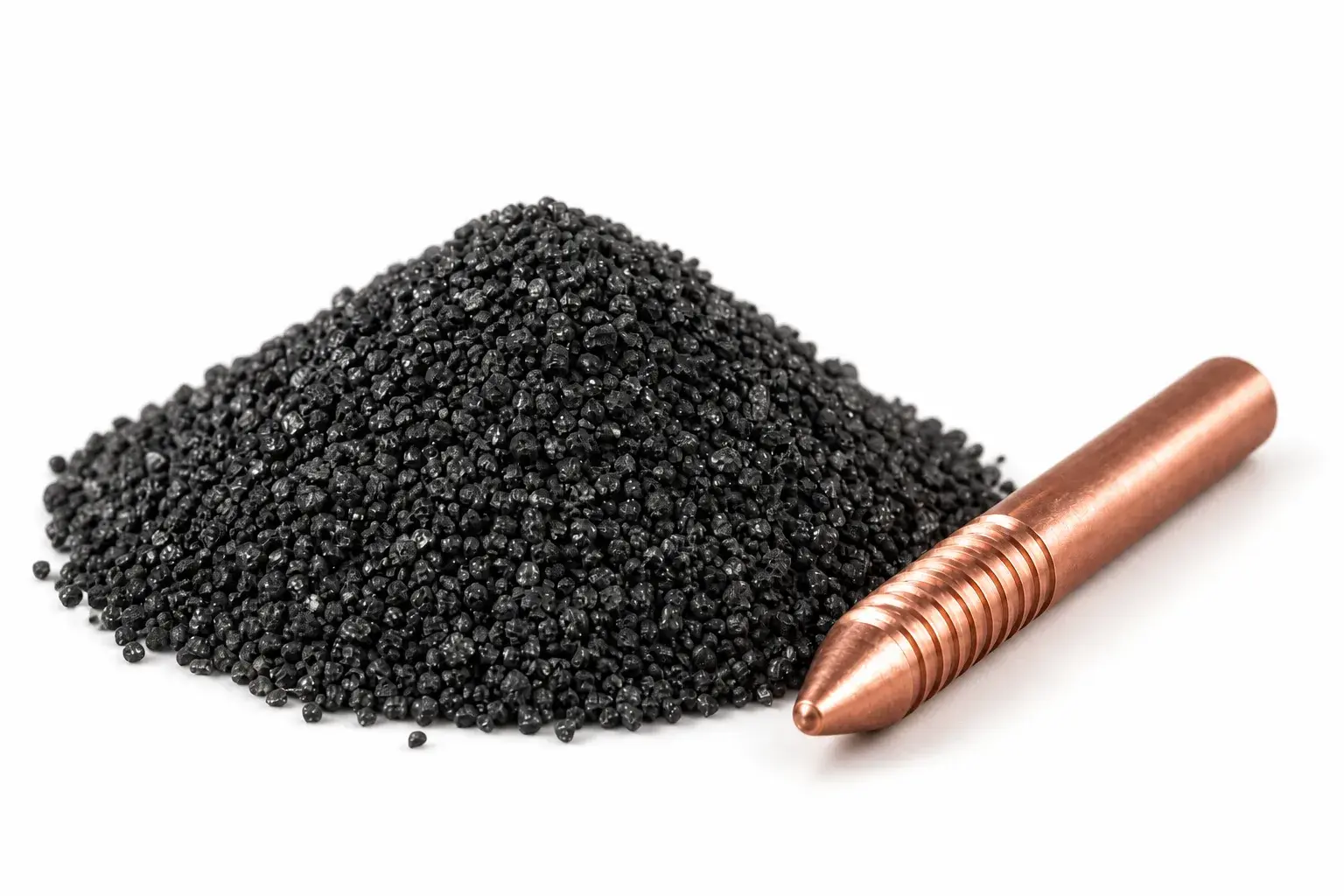
In an earthing system, total resistance combines the electrode and soil contact. ESGRAF covers two graphite roles: (1) solid electrodes —bars or cylinders, typically extruded or high-density— as a premium alternative to copper/Copperweld in corrosive, saline, or high-resistivity soils; (2) conductive backfill (graphite powder or granules) around the electrode to enlarge contact area and stabilize resistance without leachable salts. Graphite does not oxidize like metal; selection depends on soil aggressiveness, fault current, and pit geometry.
[ Problem it solves ]
Achieve a stable, durable earthing system where copper or steel fail from corrosion, or where dry/rocky soils need more contact area and a non-leaching ground enhancement material.
Processes
- Facility grounding
- Graphite electrodes in corrosive or high-resistivity soils
- Conductive earthing-pit backfill
- Fault-current and lightning dissipation
Operating conditions
- Corrosive or aggressive soil environments
When it is suitable
- The soil has high resistivity
- The metal system corrodes in aggressive soil
- Maintenance of the earthing system is frequent and costly
- The installation requires resistance to stay stable over time
When it may not be suitable
- There is no soil resistivity study to support the design
- The installation cannot meet local codes with that configuration
- The material would be applied without control of compaction and moisture
Process challenges
- Corrosion of metallic systems
- High soil resistivity
- Frequent maintenance
Advantages
- Chemical stability in aggressive soils
- Adequate conductivity
- Long service life
Limitations
- Electrical design must meet local codes
- Resistivity depends on installation and soil
- Does not replace the grounding study
[ Critical selection variables ]
These variables define the grade and the geometry. Actual values are confirmed against the grade datasheet.
- Soil resistivity and aggressivenessDecisive
- Humidity and ambient conditionsDecisive
- Application methodDecisive
- Particle sizeRelevant
- Conductor size and typeRelevant
- Dosage and application frequencyRelevant
[ Required material properties ]
Properties that guide selection. Numerical values come from each grade's datasheet.
Critical properties
- Electrical resistivity
- Purity
- Chemical resistance
- Particle size distribution
Secondary properties
- Dispersibility
[ Related ]
[ Frequently asked questions ]
View all FAQsTechnical content reviewed by ESGRAF — Last reviewed: September 8, 2026
[ Quote ]
Need the right specification—not just material?
Tell us your application. Engineering response in under 24 hours.