
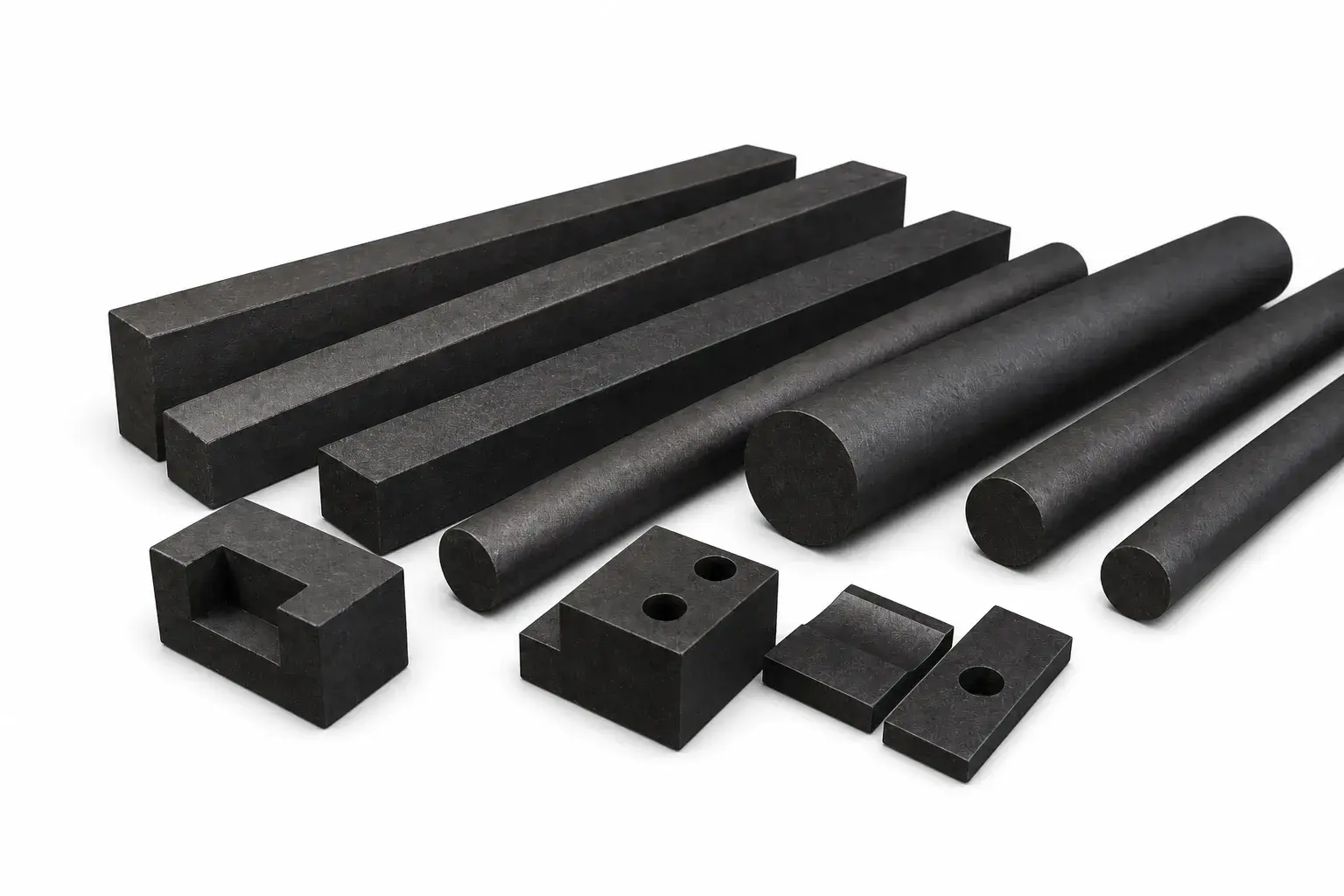
Electrical conductive elements
Static conductive element
Also known as: Graphite conductive elements · Carbon connectors and terminals · Graphite conductor bars · Machined conductive parts
[ Technical summary ]
This application groups the graphite parts that carry current without sliding: connections, terminals, bars, electrode holders, and resistive elements. Graphite is of interest when the conductor must also withstand temperature or corrosion, conditions where copper oxidizes or loses properties. Its resistivity is higher than a metal, so the part section is sized from the published grade value and the expected current.
[ Problem it solves ]
Carry current at points where a metal conductor corrodes or loses properties from temperature, with a part machinable to the shape the installation requires.
Operating conditions
- Electrical conduction
- Grounding
- Resistive elements
When it is suitable
- The conductor works at temperature or in a corrosive medium
- The metal connection degrades and forces frequent maintenance
- The part must be machined to a shape specific to the installation
- A resistive element with defined geometry is required
When it may not be suitable
- The application demands the low resistivity only a metal conductor gives
- The part works in air at high temperature without protection
- The electrical design has not been validated by engineering
Process challenges
- Contact resistance
- Corrosion of metallic conductors
- Elevated temperature
Advantages
- Stable conductivity
- Chemical resistance
- Machinable shapes
Limitations
- Wear from arcing or electrical erosion
- Conductivity and density must be calibrated to the process
- Some grades are not suitable for high purity
[ Critical selection variables ]
These variables define the grade and the geometry. Actual values are confirmed against the grade datasheet.
- Current densityDecisive
- Geometry and tolerancesDecisive
- Operating temperatureDecisive
- Fluid or medium in contactRelevant
- Conductor size and typeRelevant
- Fastening system and jointsRelevant
[ Required material properties ]
Properties that guide selection. Numerical values come from each grade's datasheet.
Critical properties
- Electrical resistivity
- Purity
- Machinability
- Thermal stability
Secondary properties
- Chemical resistance
- Compressive strength
- Dimensional stability
[ Related ]
Products
Industries
[ Frequently asked questions ]
View all FAQsTechnical content reviewed by ESGRAF — Last reviewed: September 8, 2026
[ Quote ]
Need the right specification—not just material?
Tell us your application. Engineering response in under 24 hours.