
Railway lubrication
Wheel-rail contact lubrication
Also known as: Graphite rail lubricant · Flange and rail lubrication · Track lubrication · Solid railway lubricant
[ Technical summary ]
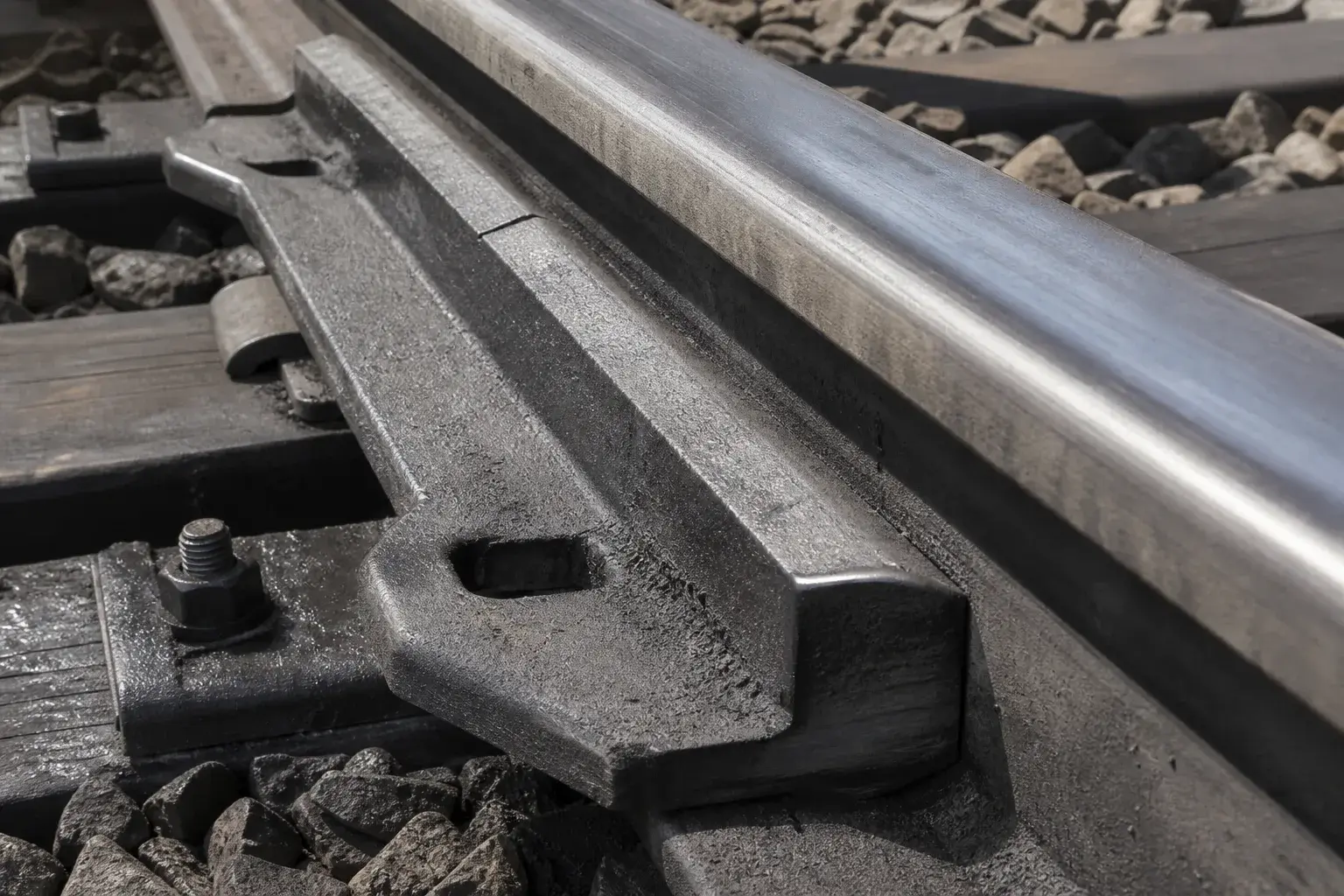
On curves, the wheel flange rubs against the rail gauge face under very high load, and that contact governs the wear of both elements and the characteristic curve noise. Lubrication seeks to reduce friction on that flank only, without affecting the running surface where adhesion is needed for traction and braking. Graphite offers a durable solid film that holds under that load and under weather exposure.
[ Problem it solves ]
Reduce wear and noise at the flange-to-rail contact on curves without compromising adhesion on the running surface, which traction and braking depend on.
Processes
- Rail/flange lubrication
- Wheel-rail contact
Operating conditions
- Outdoor operation
When it is suitable
- Lateral rail wear concentrates on curves
- Rubbing noise appears when passing through curves
- Liquid lubrication is lost to the weather
- Grease contamination along the track needs reducing
When it may not be suitable
- The product could reach the running surface and affect adhesion
- The railway operating standard does not contemplate that product
- Wear comes from track geometry outside tolerance
Process challenges
- Rail and flange wear
- Noise
- Environmental contamination from greases
Advantages
- Durable lubrication
- Good load behavior
- Controlled application options
Limitations
- Not a hydrodynamic oil lubricant
- May stain light-colored surfaces
- Performance depends on surface preparation and reapplication
[ Critical selection variables ]
These variables define the grade and the geometry. Actual values are confirmed against the grade datasheet.
- Load and its distributionDecisive
- Application methodDecisive
- Counterface material and finishDecisive
- Humidity and ambient conditionsRelevant
- Reapplication frequencyRelevant
- Sliding speedRelevant
[ Required material properties ]
Properties that guide selection. Numerical values come from each grade's datasheet.
Critical properties
- Lubricating film formation
- Friction coefficient
- Self-lubrication
- Compressive strength
Secondary properties
- Wear resistance
- Chemical resistance
[ Related ]
[ Frequently asked questions ]
View all FAQsTechnical content reviewed by ESGRAF — Last reviewed: September 8, 2026
[ Quote ]
Need the right specification—not just material?
Tell us your application. Engineering response in under 24 hours.