
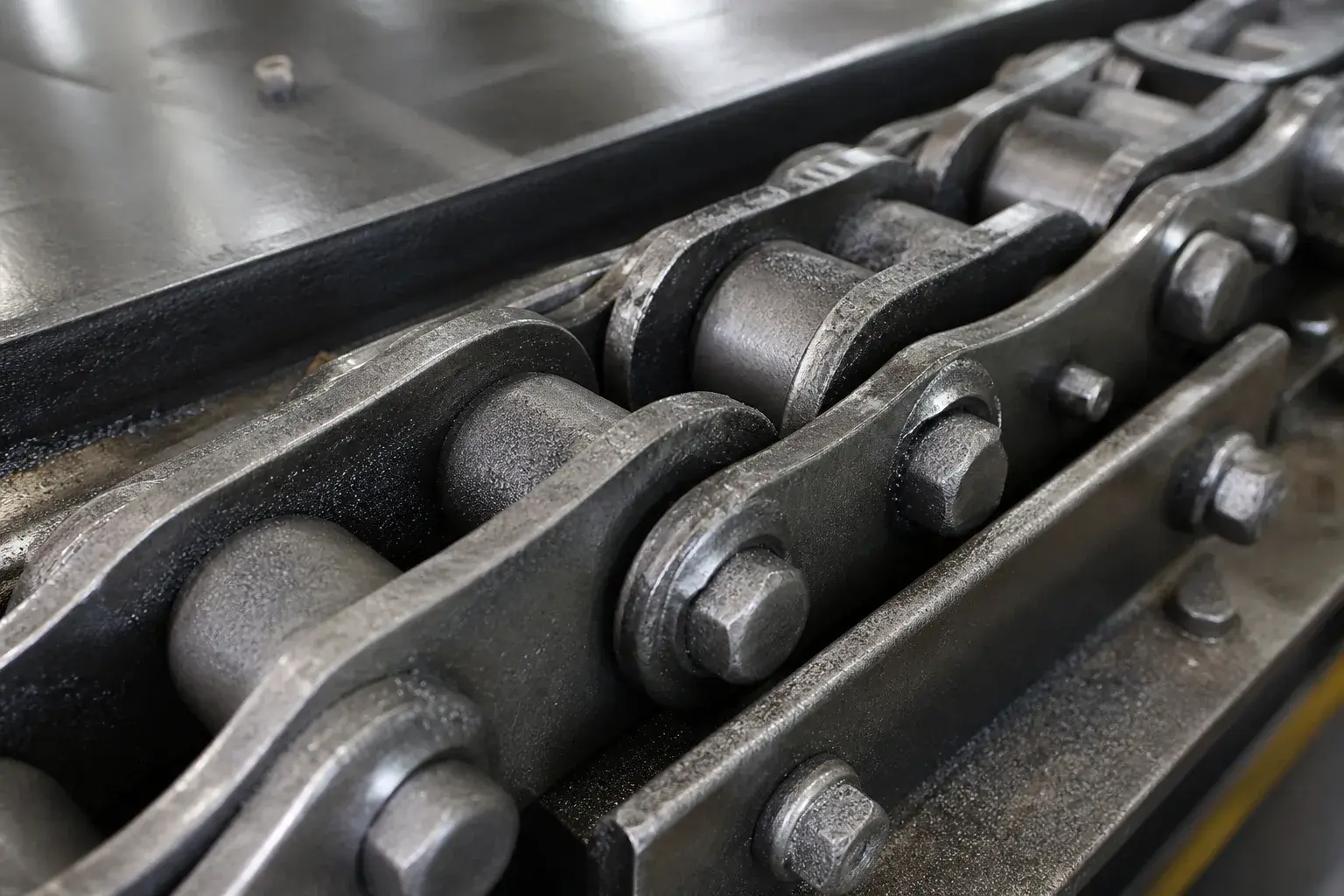
Conveyor chain lubrication
Industrial conveyor lubrication
Also known as: Graphite lubricant for conveyor chains · Dry lubrication for belts and chains · Conveyor lubricant for dusty environments · Anti-seize for conveyor links
[ Technical summary ]
On an industrial conveyor the chain covers long distances with many joints, and only a few seizing is enough to raise motor load and cause breakages. In dusty or particle-laden environments, oil makes the problem worse: it retains airborne material and forms an abrasive paste inside the joint. A dry graphite film lubricates without retaining contamination, which in those environments reduces corrective maintenance.
[ Problem it solves ]
Lubricate conveyor joints in dusty environments without the lubricant retaining particles and turning them into an abrasive inside the link.
Processes
- Conveyor chains
- Periodic lubrication
Operating conditions
- Dusty or hot environments
When it is suitable
- The conveyor works in a dusty or particle-laden environment
- The greased chain accumulates dirt in the joints
- Motor load rises from chain friction
- The line runs at temperatures above the oil range
When it may not be suitable
- The chain requires continuous lubrication from an automatic oil system
- Wear comes from incorrect chain tension or alignment
- The surface tolerates no black residue and there will be no cleaning stage
Process challenges
- Link wear
- Seizing / galling
- Oil contamination
Advantages
- Dry lubrication
- Useful as powder or at temperature
- Reduces corrective maintenance
Limitations
- Not a hydrodynamic oil lubricant
- May stain light-colored surfaces
- Performance depends on surface preparation and reapplication
[ Critical selection variables ]
These variables define the grade and the geometry. Actual values are confirmed against the grade datasheet.
- Presence of abrasives or solidsDecisive
- Application methodDecisive
- Load and its distributionRelevant
- Operating temperatureRelevant
- Reapplication frequencyRelevant
- Humidity and ambient conditionsRelevant
[ Required material properties ]
Properties that guide selection. Numerical values come from each grade's datasheet.
Critical properties
- Lubricating film formation
- Friction coefficient
- Thermal stability
- Particle size distribution
Secondary properties
- Self-lubrication
- Wear resistance
[ Related ]
[ Frequently asked questions ]
View all FAQsTechnical content reviewed by ESGRAF — Last reviewed: September 8, 2026
[ Quote ]
Need the right specification—not just material?
Tell us your application. Engineering response in under 24 hours.