
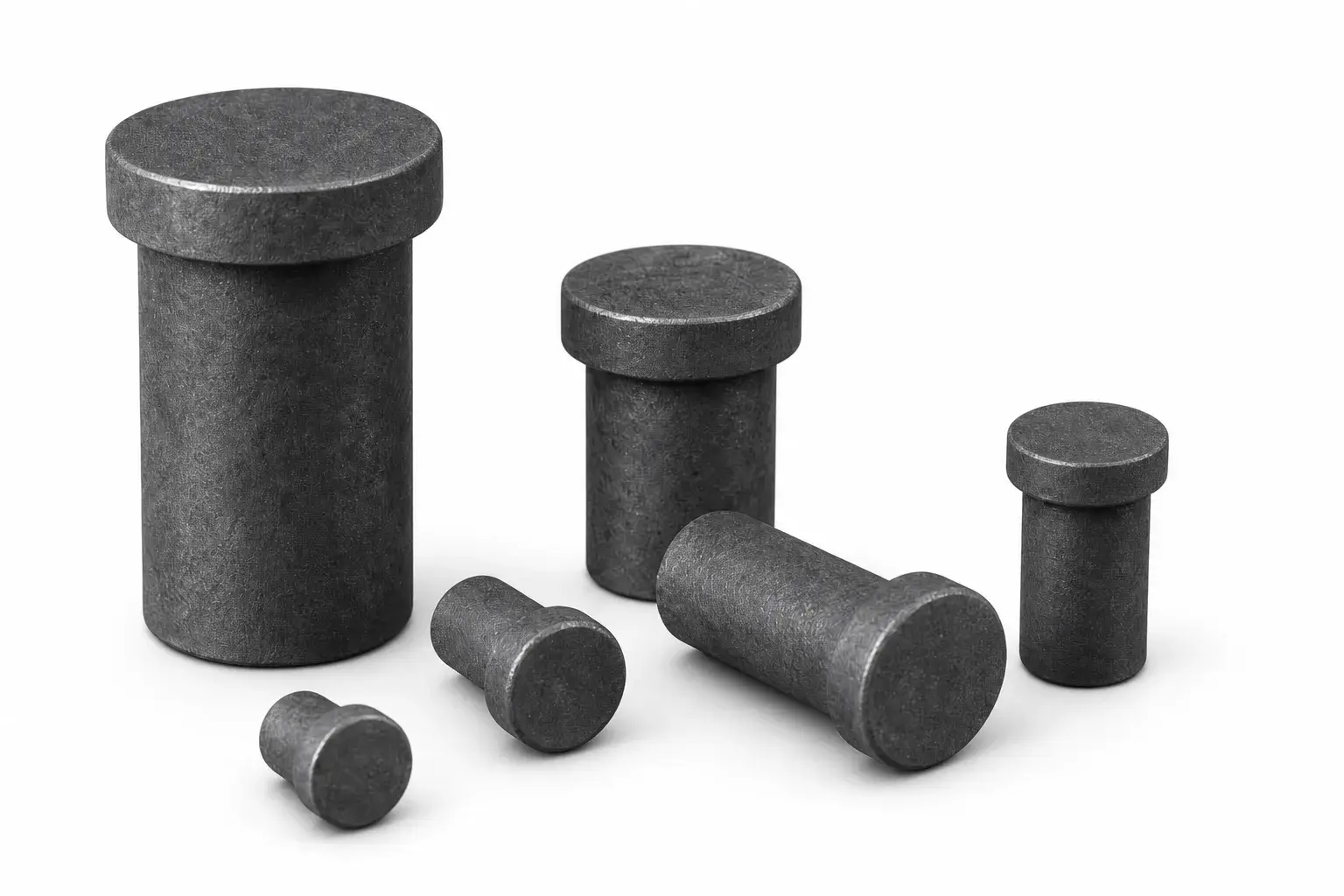
Machine graphite plugs
Thermal plugging element
Also known as: Graphite casting plugs · Graphite stoppers · Graphite refractory plugs · Graphite plug rods
Graphite plugs selected for the geometry and operating conditions of sealing or dry-lubrication applications.
[ Technical summary ]
Graphite plugs close off holes, channels, and seats exposed to hot metal or to furnace temperature. Graphite keeps its geometry through the thermal cycle and shows low adhesion to many metals, so the plug closes without sticking or distorting the way a metal stopper does. They are machined to the size of the seat, in foundry, steel, and heat-treatment work.
Graphite plugs can support sealing or dry lubrication where their geometry and material grade match the operating conditions. Share the dimensions, load, temperature, and environment so ESGRAF can recommend and justify the appropriate material.
[ Problem it solves ]
Repeatably close a hole or channel exposed to hot metal, where a metal plug distorts, welds itself to the seat, or contaminates the metal in contact.
Processes
- Plugging / sealing off
Operating conditions
- High temperature
- Contact with metal or refractory
When it is suitable
- The plug is exposed to hot metal or furnace temperature
- A metal stopper sticks to the seat or distorts
- Low adhesion to the metal in contact is wanted
- The seat requires a part machined to size
When it may not be suitable
- The closure must hold high pressure on the metal side
- There are impact or repeated shock loads
- There is severe oxidation in air at high temperature without protection or impregnation
- The metal or slag in contact chemically attacks the carbon
Process challenges
- Thermal leaks
- Deformation of metal plugs
- Contamination
Advantages
- Thermal stability
- Custom machining
- Low adhesion on many metals
Limitations
- Oxidation in air at high temperature without protection
- Lower mechanical strength than structural metals
- Requires grade selection by load and environment
[ Critical selection variables ]
These variables define the grade and the geometry. Actual values are confirmed against the grade datasheet.
- Operating temperatureDecisive
- Geometry and tolerancesDecisive
- Fluid or medium in contactDecisive
- Thermal and duty cyclingDecisive
- Atmosphere (air, inert, vacuum)Relevant
- Clearance and type of fitRelevant
[ Required material properties ]
Properties that guide selection. Numerical values come from each grade's datasheet.
Critical properties
- Compressive strength
- Thermal shock resistance
- Thermal expansion
- Non-wetting by molten metal
Secondary properties
- Oxidation resistance
- Ash content
- Dimensional stability
- Machinability
[ Related ]
Products
Industries
Related applications
[ Frequently asked questions ]
View all FAQsTechnical content reviewed by ESGRAF — Last reviewed: September 8, 2026
[ Quote ]
Need the right specification—not just material?
Tell us your application. Engineering response in under 24 hours.