
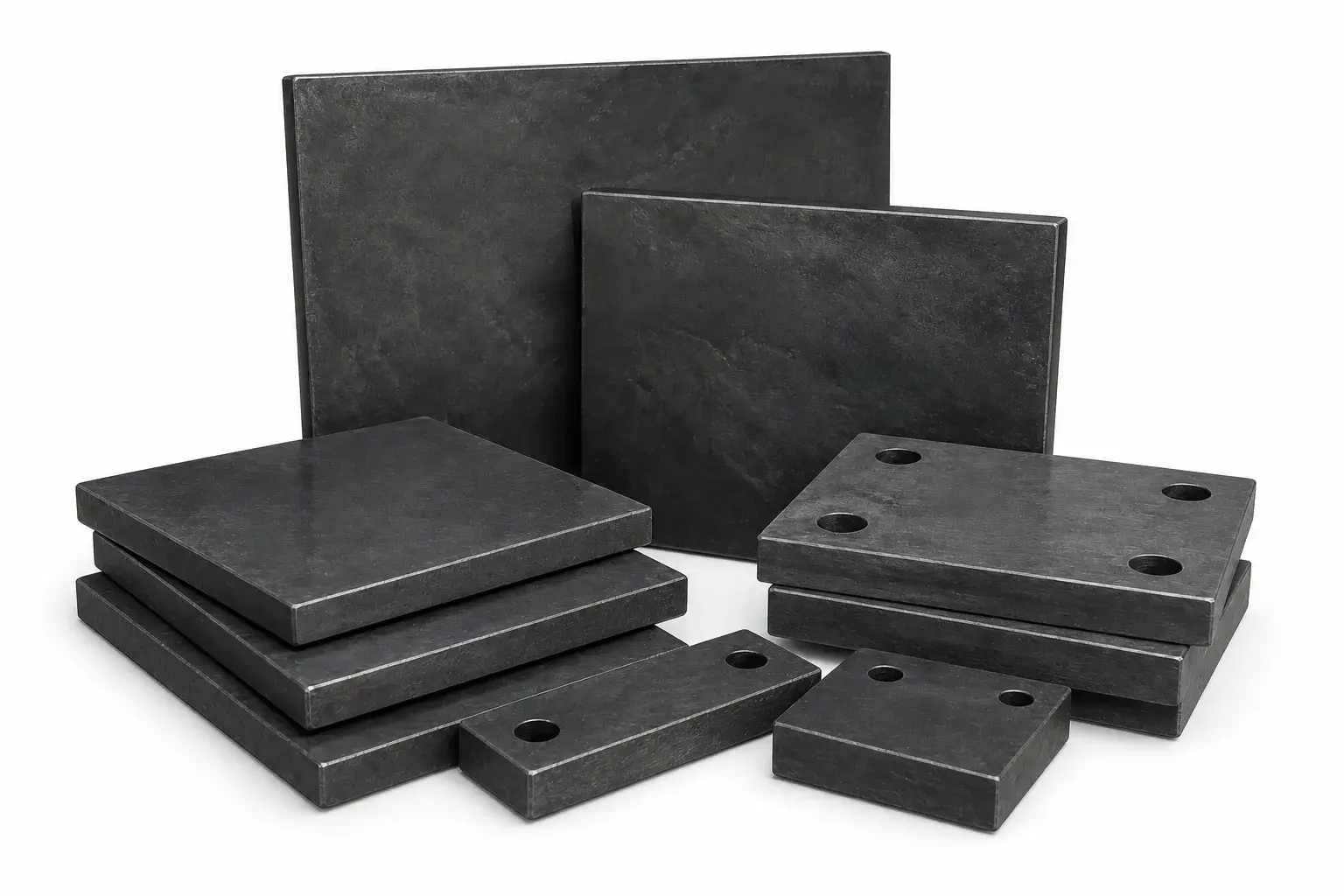
Machine sliding plates
Dry sliding surface
Also known as: Graphite guide plates · Graphite antifriction plates · Graphite slide pads · Carbon-graphite slideways
[ Technical summary ]
Graphite sliding plates form the contact surface of linear guides, slideways, and supports that must move without liquid lubrication. Graphite offers a low dry coefficient of friction and keeps its geometry at temperature, so the guide neither galls nor needs relubrication. They are cut and machined to the size of the seat, with bores and counterbores when the assembly requires them.
[ Problem it solves ]
Give a guide or slideway a stable sliding surface that does not depend on oil or grease, when temperature or process cleanliness prevents maintaining a lubricant film.
Processes
- Dry sliding
- Linear guides
Operating conditions
- High temperature
When it is suitable
- The guide must slide dry, without an oil film
- The slideway works at elevated temperature
- Galling or wear of the metal guide causes downtime
- Lubricant contamination is not acceptable
- A flat, stable surface is needed along the travel
When it may not be suitable
- The plate takes impact loads or blows from the moving load
- The surface is exposed to abrasive particles without protection
- The mounting flexes and transmits bending stress to the plate
- There is severe oxidation in air at high temperature without protection or impregnation
Process challenges
- Elevated friction
- Seizing / scoring
- Guide wear
Advantages
- Low coefficient of friction
- Thermal stability
- Custom cutting and machining
Limitations
- Oxidation in air at high temperature without protection
- Lower mechanical strength than structural metals
- Requires grade selection by load and environment
[ Critical selection variables ]
These variables define the grade and the geometry. Actual values are confirmed against the grade datasheet.
- Load and its distributionDecisive
- Sliding speedDecisive
- Operating temperatureDecisive
- Flatness and surface finishDecisive
- Counterface material and finishRelevant
- Geometry and tolerancesRelevant
- Atmosphere (air, inert, vacuum)Relevant
[ Required material properties ]
Properties that guide selection. Numerical values come from each grade's datasheet.
Critical properties
- Friction coefficient
- Wear resistance
- Compressive strength
- Flexural strength
Secondary properties
- Self-lubrication
- Thermal expansion
- Dimensional stability
- Machinability
[ Related ]
[ Frequently asked questions ]
View all FAQsTechnical content reviewed by ESGRAF — Last reviewed: September 8, 2026
[ Quote ]
Need the right specification—not just material?
Tell us your application. Engineering response in under 24 hours.