
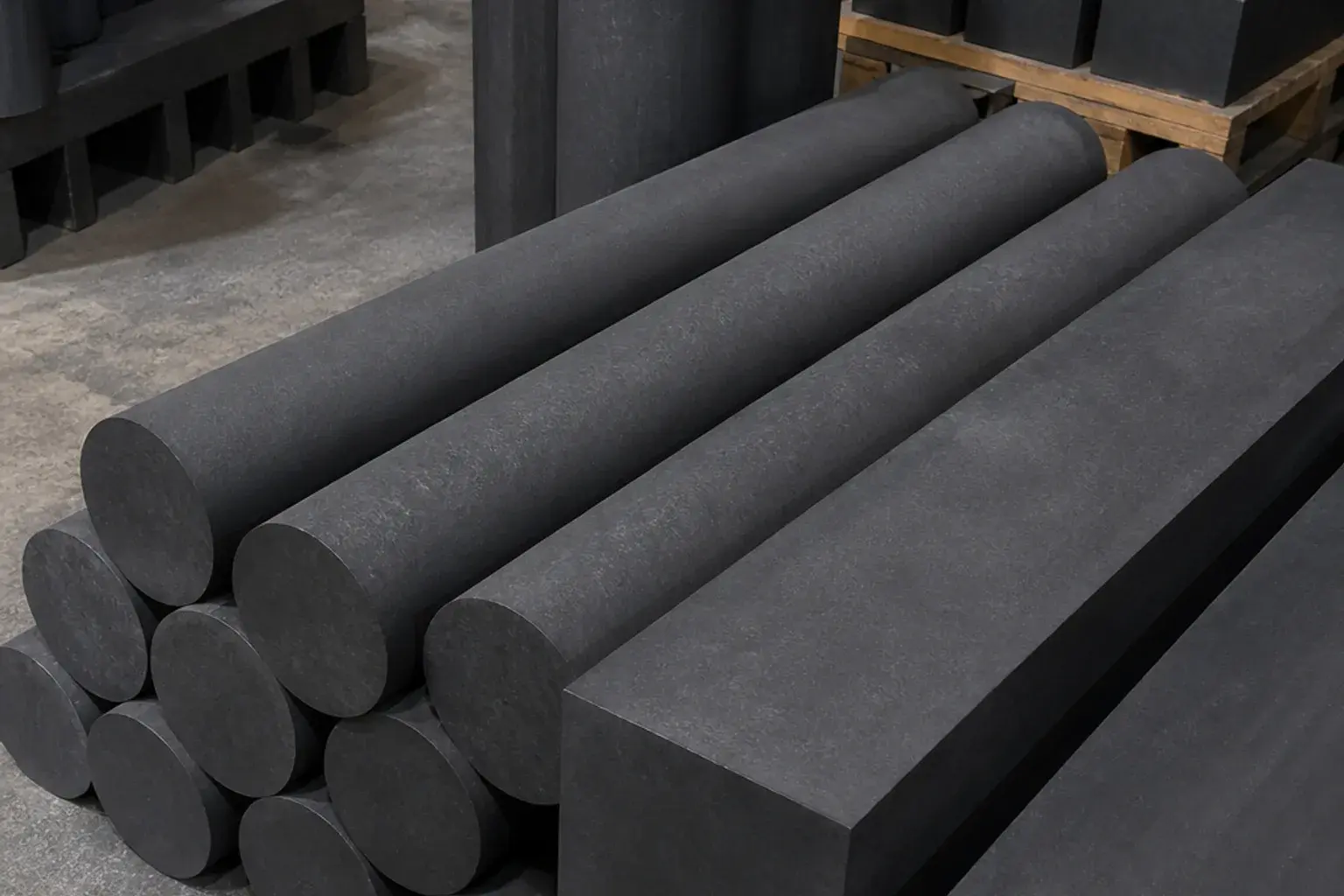
Electrolysis anodes
Electrochemical process electrode
Also known as: Graphite anodes · Carbon electrodes for electrolysis · Non-graphitized carbon anodes · Electrodes for electrolytic cells
Carbon anodes for electrolytic processes.
[ Technical summary ]
In an electrolytic cell the anode carries current into the electrolyte and takes part in the reaction, so it is consumed during the process. Carbon and graphite electrodes are used because they conduct well and chemically resist media where a metal would dissolve or contaminate the product. The choice between non-graphitized carbon and graphite depends on the electrolyte, the current density, and the balance of hardness, consumption, and purity the process allows.
Industrial electrolysis uses dense, hard carbons when lower thermal conductivity than full graphite is required, or specific graphites depending on the electrolyte.
ESGRAF recommends the material by current, medium and geometry. Send drawing, electrolyte and service conditions for a quote.
[ Problem it solves ]
Deliver current into the electrolyte with an electrode that resists the medium and wears predictably, without introducing metal ions that would contaminate the product.
Operating conditions
- Electrolysis
- Electrochemical processes
When it is suitable
- The electrolyte chemically attacks metal electrodes
- The product cannot tolerate contamination by metal ions
- The electrode is replaced on a planned basis as a consumable
- The electrode format is specific to the cell
When it may not be suitable
- The electrolyte and conditions have not been validated with the material
- The process requires a dimensionally stable metal-type anode
- The planned current density exceeds what the cell design allows
Process challenges
- Medium corrosion
- Anode wear
- Product contamination
Advantages
- High hardness available
- Low thermal conductivity in carbons
- Round and rectangular formats
Limitations
- Selection depends on electrolyte
- Service life limited by anode consumption
- Requires process validation
[ Critical selection variables ]
These variables define the grade and the geometry. Actual values are confirmed against the grade datasheet.
- Bath or flux chemistryDecisive
- Current densityDecisive
- Operating temperatureDecisive
- Geometry and tolerancesRelevant
- Required purity and allowable contaminationRelevant
- Fastening system and jointsRelevant
[ Required material properties ]
Properties that guide selection. Numerical values come from each grade's datasheet.
Critical properties
- Electrical resistivity
- Purity
- Chemical resistance
- Hardness
Secondary properties
- Bulk density
- Open porosity
- Compressive strength
[ Related ]
Products
[ Frequently asked questions ]
View all FAQsTechnical content reviewed by ESGRAF — Last reviewed: September 8, 2026
[ Quote ]
Need the right specification—not just material?
Tell us your application. Engineering response in under 24 hours.