
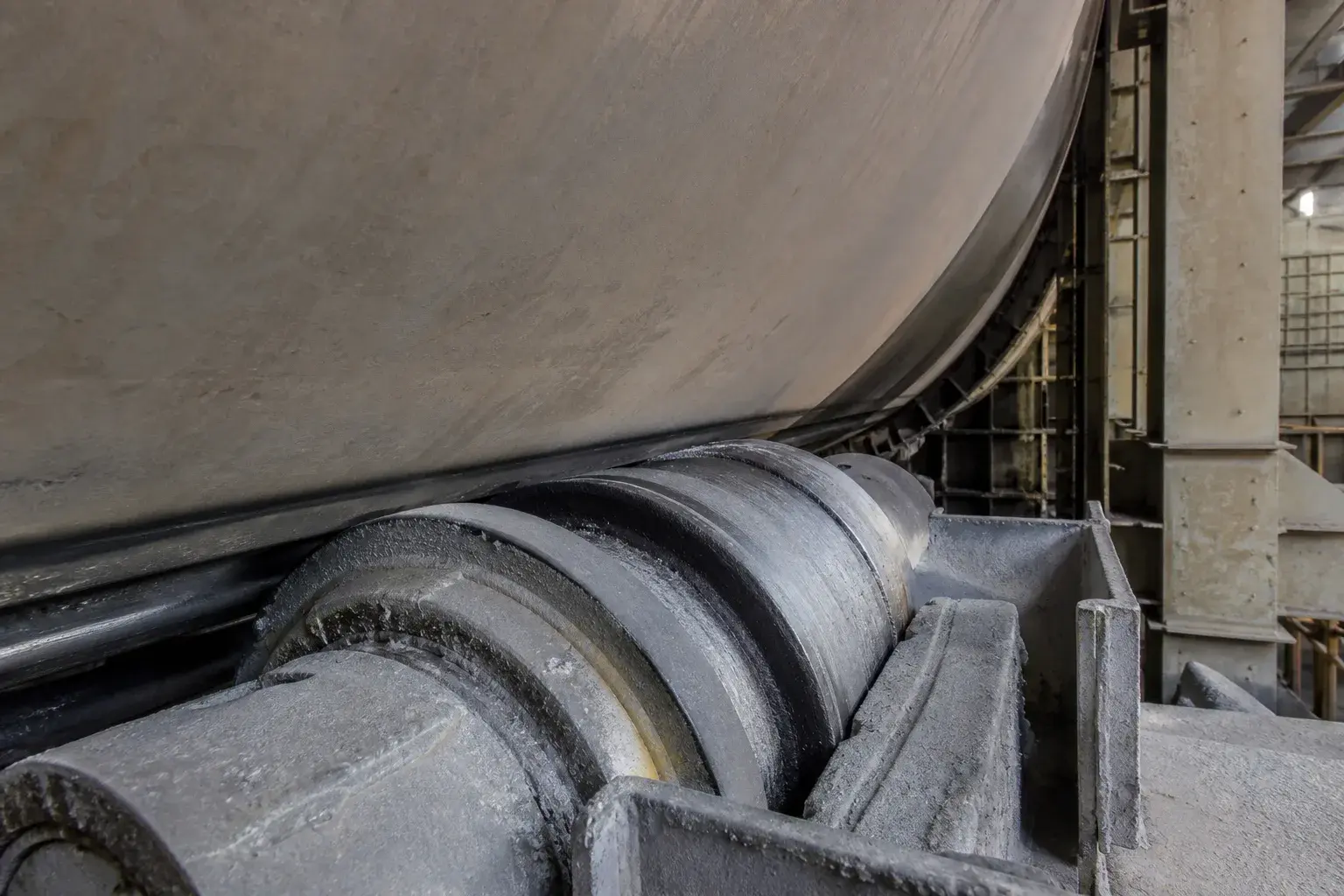
Rotary kiln track lubrication
High-temperature rolling contact lubrication
Also known as: Graphite lubricant for rotary kiln tracks · Tyre and roller lubrication for kilns · Riding ring lubricant · Graphite for cement rotary kilns
[ Technical summary ]
A rotary kiln carries its whole weight on a few rolling contacts between the riding ring and the support rollers, surfaces that run hot from the proximity of the kiln. There the load is very high and oil carbonizes or is squeezed out of the contact. A graphite lubricant leaves a solid film that stays under that load and at that temperature, reducing wear on surfaces whose repair means a prolonged plant shutdown.
[ Problem it solves ]
Sustain a lubricating film in a heavily loaded, hot rolling contact, where oil carbonizes or is squeezed out and wear forces prolonged shutdowns.
Processes
- Rotary furnaces
- Track lubrication
Operating conditions
- High temperature
When it is suitable
- Track and rollers run hot and heavily loaded
- The current lubricant carbonizes or is squeezed out of the contact
- Wear or marking is seen on the rolling surface
- Application can be done with the kiln running
When it may not be suitable
- Wear comes from kiln misalignment rather than lubrication
- Application cannot be performed with the safety the zone requires
- The surface tolerates no black residue and there will be no cleaning stage
Process challenges
- Oil carbonization
- Track wear
- Stoppages from friction
Advantages
- Thermal stability
- Dry lubrication
- Reduces seizing
Limitations
- Not a hydrodynamic oil lubricant
- May stain light-colored surfaces
- Performance depends on surface preparation and reapplication
[ Critical selection variables ]
These variables define the grade and the geometry. Actual values are confirmed against the grade datasheet.
- Load and its distributionDecisive
- Operating temperatureDecisive
- Application methodDecisive
- Reapplication frequencyRelevant
- Alignment and mounting stiffnessRelevant
- Rotational speedRelevant
[ Required material properties ]
Properties that guide selection. Numerical values come from each grade's datasheet.
Critical properties
- Lubricating film formation
- Friction coefficient
- Thermal stability
- Self-lubrication
Secondary properties
- Compressive strength
- Wear resistance
[ Related ]
[ Frequently asked questions ]
View all FAQsTechnical content reviewed by ESGRAF — Last reviewed: September 8, 2026
[ Quote ]
Need the right specification—not just material?
Tell us your application. Engineering response in under 24 hours.