
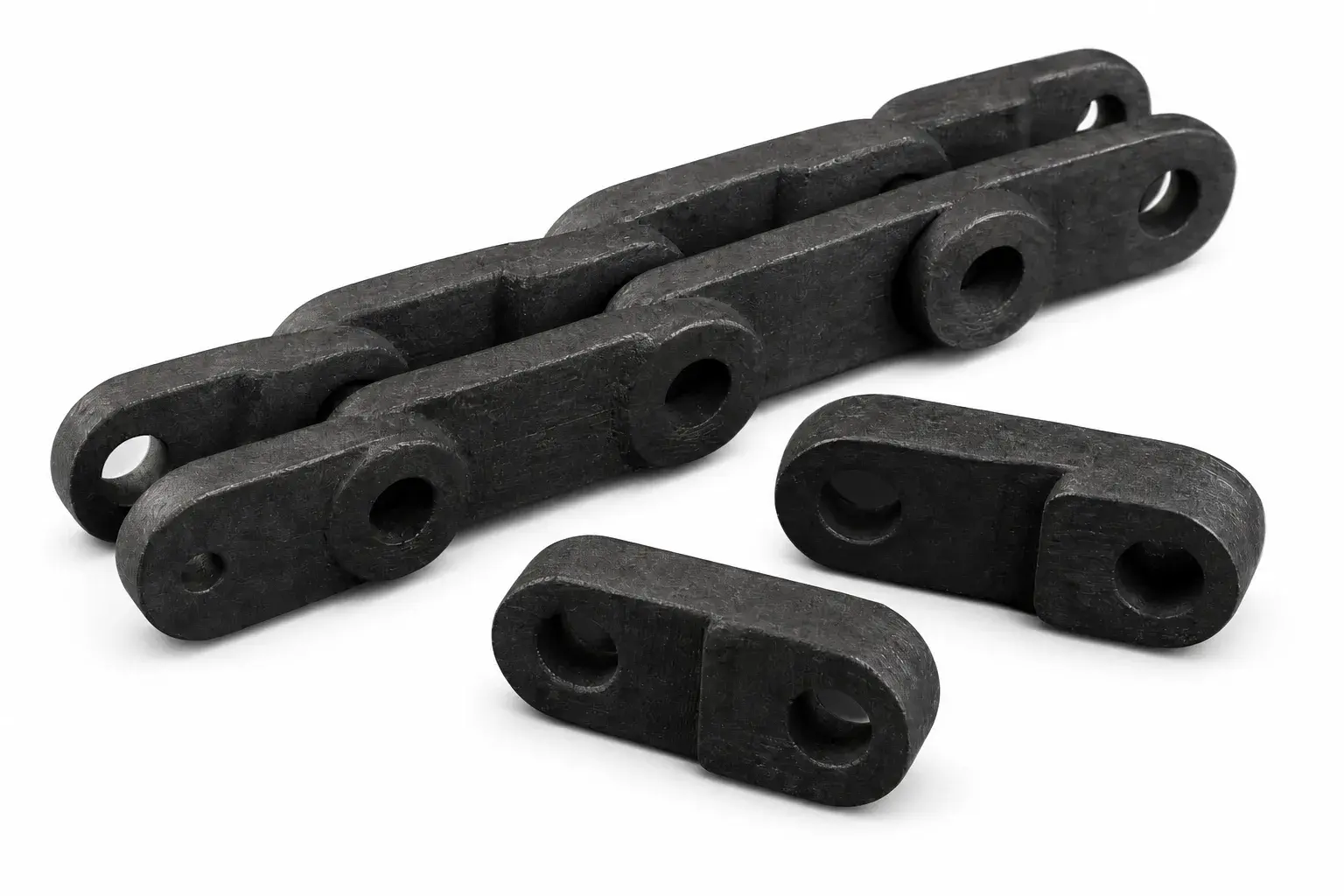
Furnace chain lubrication
In-furnace conveyor lubrication
Also known as: Graphite lubricant for furnace chains · High-temperature chain lubrication · Anti-seize for hot chain links · Lubricant for furnace conveyors
[ Technical summary ]
A chain running through a furnace passes the hot zone on every pass, and there conventional oil carbonizes: it leaves a hard deposit that seizes the links instead of lubricating them. A graphite lubricant does not depend on a carrier surviving that temperature, because what lubricates is the solid film left after the carrier evaporates. Links keep their mobility and the risk of a line stoppage from a seized chain drops.
[ Problem it solves ]
Keep the links of a chain passing through the hot zone mobile, avoiding the carbonized deposit oil leaves behind, which ends up seizing the joint.
Processes
- Furnace conveyor-chain lubrication
- Periodic reapplication
Operating conditions
- High-temperature operation
When it is suitable
- Oil carbonizes and leaves a hard deposit on the links
- The chain seizes and causes line stoppages
- The hot zone is traversed on every conveyor cycle
- Reapplication fits within the maintenance routine
When it may not be suitable
- The chain already carries carbonized deposit that is not removed first
- Seizing comes from mechanical wear of bushings and pins
- The surface tolerates no black residue and there will be no cleaning stage
Process challenges
- Oil carbonization
- Link seizing
- Line stoppages
Advantages
- Temperature-stable dry lubrication
- Reduces seizing
- Applicable hot depending on product
Limitations
- Not a hydrodynamic oil lubricant
- Requires reapplication per cycle
- May stain light-colored surfaces
[ Critical selection variables ]
These variables define the grade and the geometry. Actual values are confirmed against the grade datasheet.
- Operating temperatureDecisive
- Application methodDecisive
- Reapplication frequencyDecisive
- Load and its distributionRelevant
- Machine cycle rateRelevant
- Atmosphere (air, inert, vacuum)Relevant
[ Required material properties ]
Properties that guide selection. Numerical values come from each grade's datasheet.
Critical properties
- Lubricating film formation
- Friction coefficient
- Thermal stability
- Particle size distribution
Secondary properties
- Self-lubrication
- Wear resistance
[ Related ]
[ Frequently asked questions ]
View all FAQsTechnical content reviewed by ESGRAF — Last reviewed: September 8, 2026
[ Quote ]
Need the right specification—not just material?
Tell us your application. Engineering response in under 24 hours.