
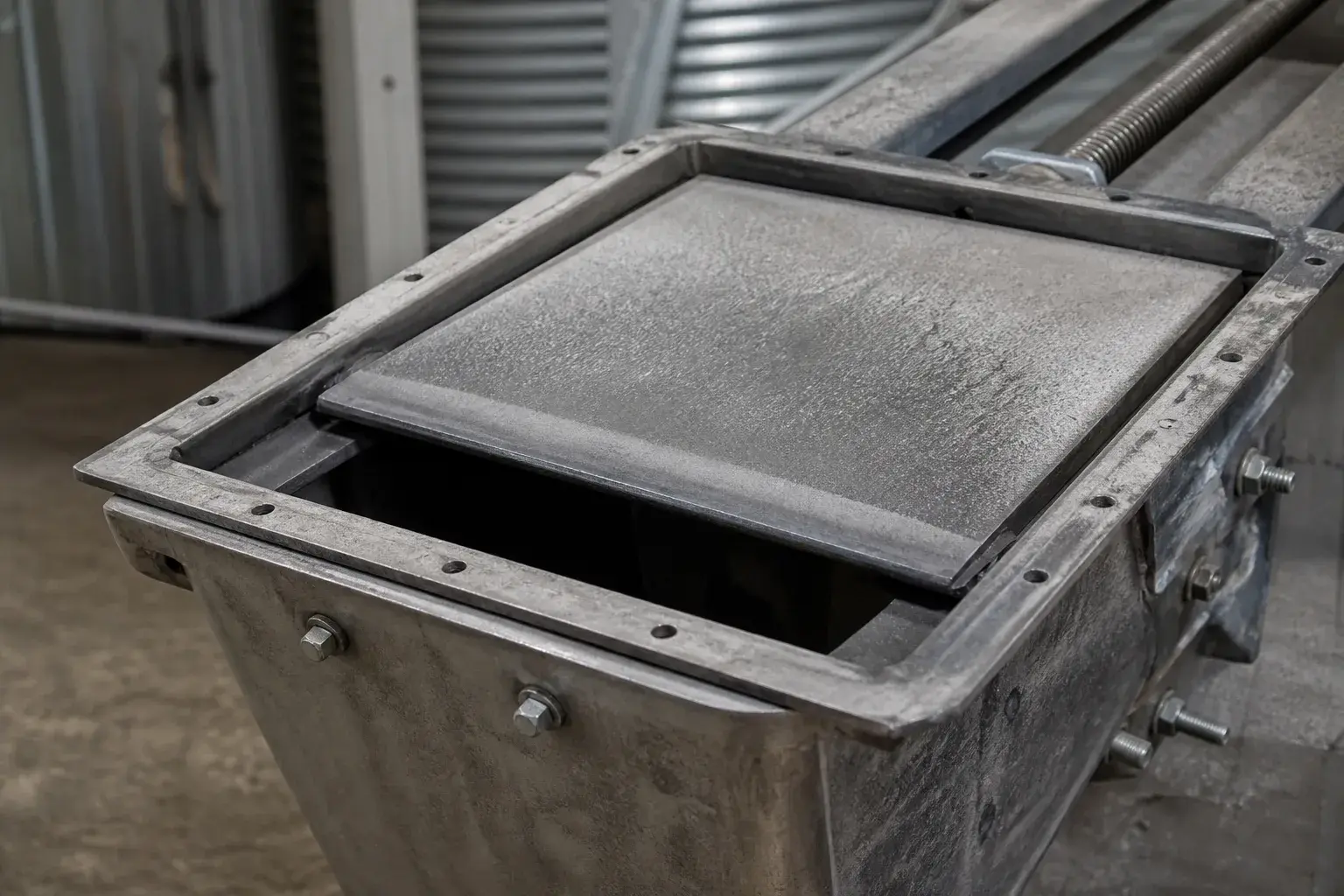
Grain hopper lubrication
Surface treatment for solids flow
Also known as: Graphite for grain hoppers · Anti-stick for hoppers and silos · Flow treatment for bulk material · Hopper wall lubricant
[ Technical summary ]
A hopper stops discharging when the material forms a stable arch over the outlet or sticks to the wall. Much of that behaviour depends on friction between the product and the hopper surface. Treating the wall with graphite reduces that friction and eases sliding, without resorting to a greasy product that in grain handling would be unacceptable for contamination and dust attraction.
[ Problem it solves ]
Reduce friction between grain and hopper wall to prevent the bridging and sticking that interrupt discharge.
Operating conditions
- Hopper flow
- Anti-stick
- Grain handling
When it is suitable
- The material bridges and stops discharge
- The product sticks to the hopper wall
- A greasy treatment is unacceptable for this product type
- The surface can be treated during cleaning stops
When it may not be suitable
- The product lacks the sanitary approval the installation requires
- Bridging comes from the hopper angle or outlet design
- Material moisture is the real cause of the sticking
Process challenges
- Bridging and sticking
- Irregular flow
- Unwanted greasy residues
Advantages
- Flow improvement
- Dry lubrication
- Easy reapplication
Limitations
- Not a hydrodynamic oil lubricant
- May stain light-colored surfaces
- Performance depends on surface preparation and reapplication
[ Critical selection variables ]
These variables define the grade and the geometry. Actual values are confirmed against the grade datasheet.
- Substrate or surface to be treatedDecisive
- Food contact or sanitary requirementsDecisive
- Application methodDecisive
- Humidity and ambient conditionsRelevant
- Reapplication frequencyRelevant
- Particle sizeRelevant
[ Required material properties ]
Properties that guide selection. Numerical values come from each grade's datasheet.
Critical properties
- Lubricating film formation
- Friction coefficient
- Particle size distribution
- Self-lubrication
Secondary properties
- Purity
[ Related ]
[ Frequently asked questions ]
View all FAQsTechnical content reviewed by ESGRAF — Last reviewed: September 8, 2026
[ Quote ]
Need the right specification—not just material?
Tell us your application. Engineering response in under 24 hours.