
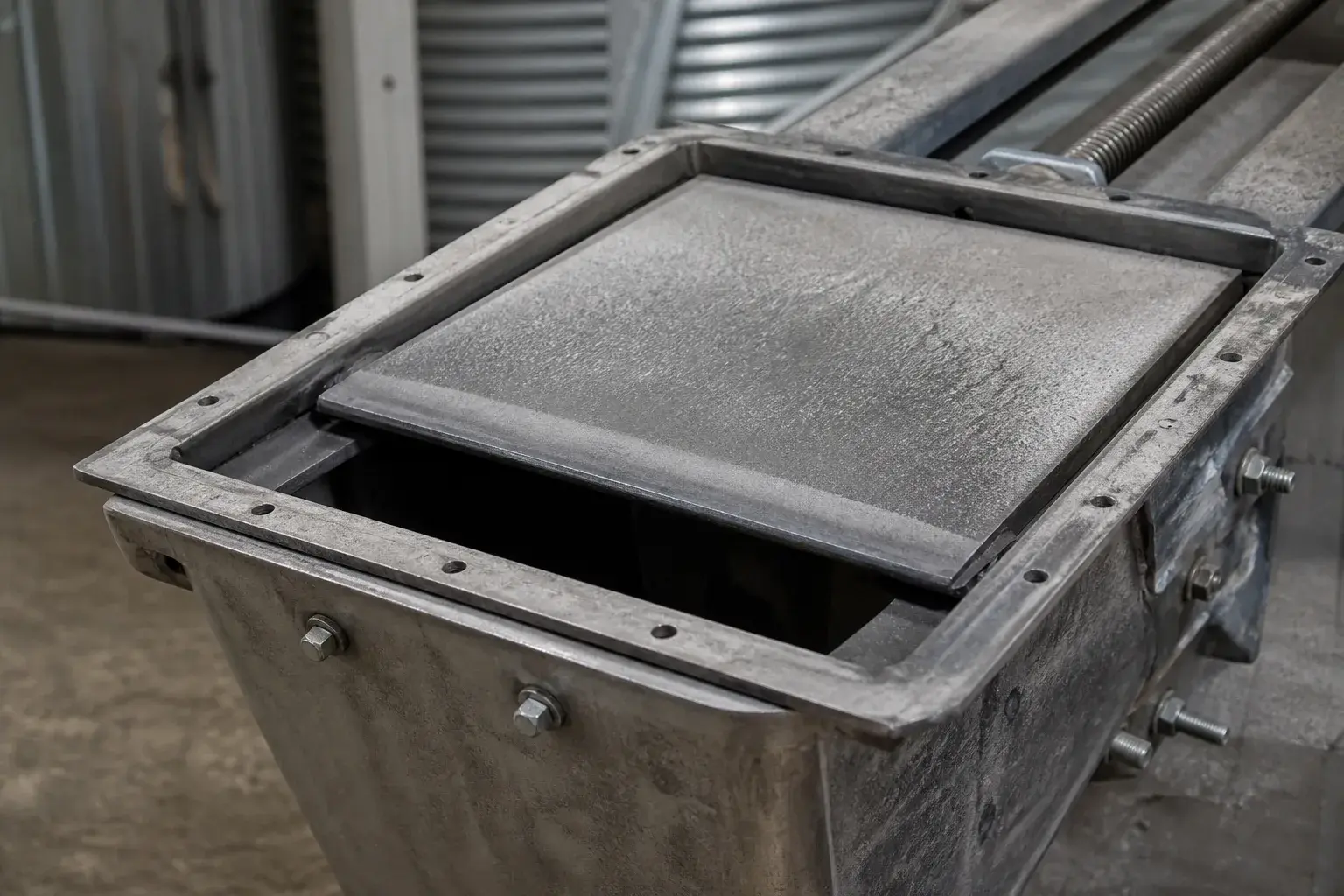
Fertilizer meter lubrication
Flow additive for fertilizer
Also known as: Graphite for fertilizer meters · Fertilizer flow lubricant · Anti-stick for fertilizer in the hopper · Flow additive for fertilizer
Flow graphite for fertilizer meters and ducts.
[ Technical summary ]
Fertilizer picks up moisture, cakes, and jams discs and ducts. A graphite powder reduces friction and improves flow. Seed lubrication and grain-hopper lubrication are separate records: here the material is fertilizer. Dose is set by the equipment and the product; this record does not publish a recipe.
Each process needs a specific product and application method. ESGRAF selects the solution according to temperature, material, load, cycle, and application method.
[ Problem it solves ]
Keep an even fertilizer flow without jams from friction or caking.
Processes
- Fertilizer metering
- Hopper and duct transfer
Operating conditions
- Dry or slightly moist fertilizer
- Discs, hoppers, and drop tubes
When it is suitable
- Fertilizer jams in the meter
- There is caking in the hopper or duct
- The flow is not even
When it may not be suitable
- The fertilizer tolerates no black additive
- The meter manufacturer forbids flow additives
- The material is wet and requires another process
Process challenges
- Jams in the metering disc
- Caking from moisture
- Uneven flow
Advantages
- Reduces friction in meter and duct
- Improves flow of caked fertilizer
- It is not a grease that contaminates the equipment
Limitations
- Does not dry wet fertilizer
- May tint black if over-applied
- Dose is not published in this record
[ Critical selection variables ]
These variables define the grade and the geometry. Actual values are confirmed against the grade datasheet.
- Particle sizeDecisive
- Dosage and application frequencyDecisive
- Humidity and ambient conditionsDecisive
- Application methodRelevant
- Presence of abrasives or solidsRelevant
- Required purity and allowable contaminationRelevant
[ Required material properties ]
Properties that guide selection. Numerical values come from each grade's datasheet.
Critical properties
- Particle size distribution
- Friction coefficient
- Self-lubrication
Secondary properties
- Dispersibility
- Purity
[ Related ]
[ Frequently asked questions ]
View all FAQsTechnical content reviewed by ESGRAF — Last reviewed: October 28, 2026
[ Quote ]
Need the right specification—not just material?
Tell us your application. Engineering response in under 24 hours.