
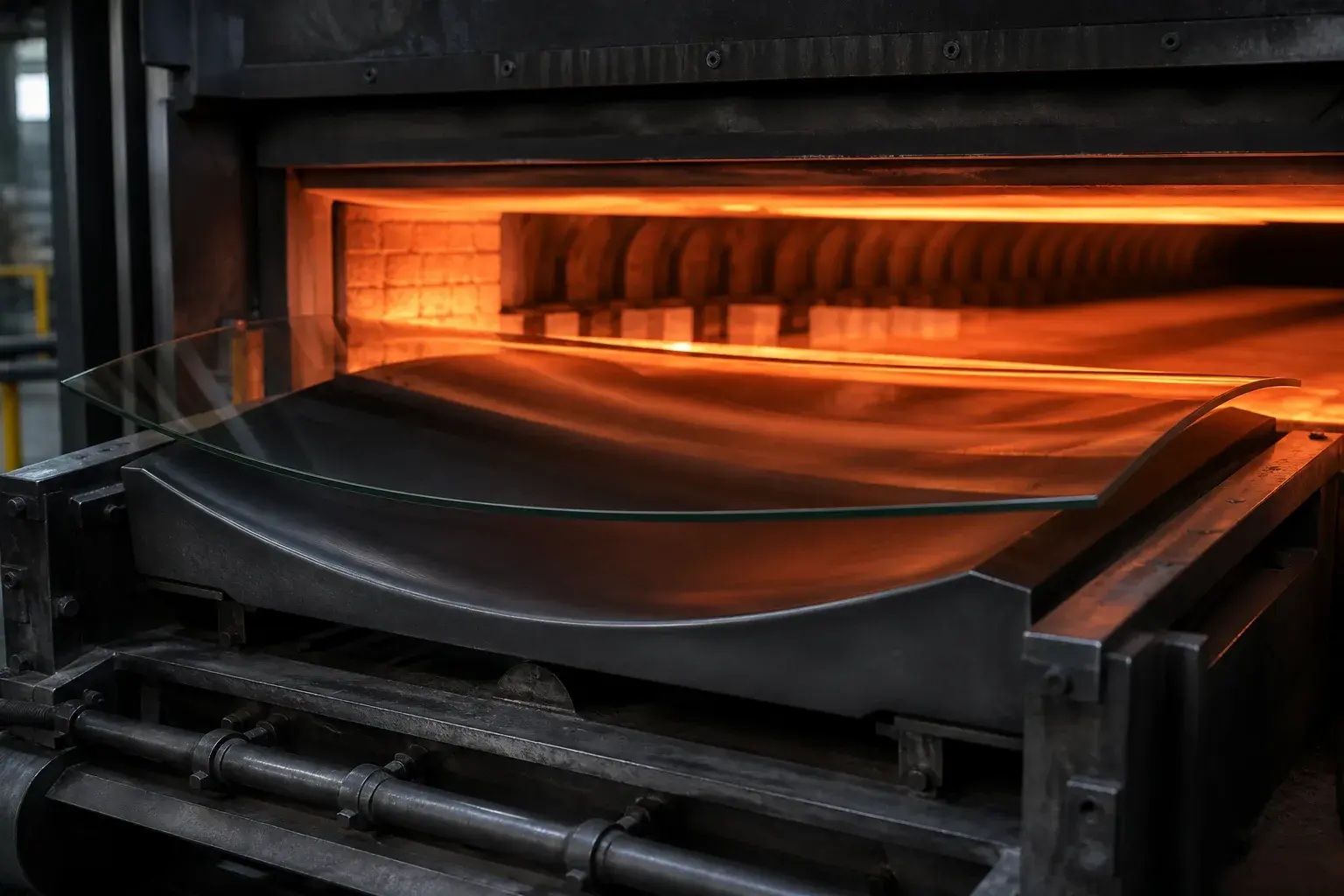
Glass hot-fixture and hearth protection
Coating for trays, skeletons, and hearths in contact with hot glass
Also known as: Glass hearth coating · Protection of trays for incandescent glass · Paint for metallic bending skeletons · Anti-stick for hot-glass fixtures
Graphite film for trays, skeletons, and hearths in hot-glass service.
[ Technical summary ]
Besides the bending mold, hot glass touches trays, skeletons, and hearths. There thermal shock and sticking mark the glass or damage the fixture. A graphite coating forms an anti-stick film on that tooling. The bending and forming mold is a separate record. The re-coating cycle is set by the line.
Each process needs a specific product and application method. ESGRAF selects the solution according to temperature, material, load, cycle, and application method.
[ Problem it solves ]
Protect trays, skeletons, and hearths in contact with incandescent glass without marks or sticking.
Processes
- Glass bending and tempering
- Incandescent-glass transfer
Operating conditions
- Contact with incandescent glass
- Thermal shock on metallic fixtures
When it is suitable
- Glass is marked on tray, skeleton, or hearth
- There is sticking on transfer fixtures
- Thermal shock damages the previous coating
When it may not be suitable
- The glass tolerates no residue on the visible face
- The process specifies a coating of another chemistry
- The surface tolerates no black residue and there will be no cleaning stage
Process challenges
- Marks on the glass
- Thermal shock of the fixture
- Even coverage on open geometry
Advantages
- Reduces sticking on tray and hearth
- Film that withstands thermal shock
- Protects transfer fixtures
Limitations
- Does not replace the bending-mold application
- The coating wears with the cycle
- May leave residue if over-applied
[ Critical selection variables ]
These variables define the grade and the geometry. Actual values are confirmed against the grade datasheet.
- Operating temperatureDecisive
- Thermal shock severityDecisive
- Glass compositionRelevant
- Application methodRelevant
- Film thicknessRelevant
- Direct contact with the partDecisive
[ Required material properties ]
Properties that guide selection. Numerical values come from each grade's datasheet.
Critical properties
- Lubricating film formation
- Friction coefficient
- Thermal shock resistance
- Thermal stability
Secondary properties
- Wear resistance
- Non-wetting by molten metal
[ Related ]
Industries
Related applications
[ Frequently asked questions ]
View all FAQsTechnical content reviewed by ESGRAF — Last reviewed: October 28, 2026
[ Quote ]
Need the right specification—not just material?
Tell us your application. Engineering response in under 24 hours.