How to select graphite for EDM: roughing, general purpose, and fine finishing
Published on 6/12/2026· Updated on 6/12/2026
How to select EDM graphite for roughing, general purpose, or fine finishing: grain size, electrode wear, and what ESGRAF needs to quote.

Ordering “EDM graphite” without defining the duty cycle is like ordering a cutting tool without knowing whether you will rough or finish. The same blank can perform differently depending on metal removal rate, allowable electrode wear, and the surface finish you need in the cavity.
This guide helps you select graphite for EDM across three typical duties —roughing, general purpose, and fine finishing— and gather what ESGRAF needs to recommend a grade. For process basics, also see electron discharge machining with graphite.
The problem: one grade for every electrode
Many shops inherit a “default” grade and machine both roughing and finishing electrodes from it. The symptom shows up later: early tip wear, cavity roughness out of spec, or longer burn times than planned.
Correct selection aligns erosion duty + grain size + electrode geometry + workpiece material. Changing amperage alone does not fix a mismatched grade.
What graphite does in sinker EDM
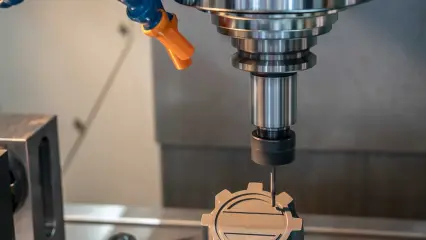
In sinker EDM, the EDM graphite electrode carries the discharge that melts and vaporizes metal on the workpiece. Dielectric fluid clears debris; electrode wear and surface quality depend, among other factors, on the graphite grade.
Industrial practice looks for grades with controlled grain, bounded open porosity, and a workable balance between electrode machinability and stability during burning. On ESGRAF’s product page, typical family ranges include grain size on the order of 4–12 µm and open porosity on the order of 6–14 %, plus resistivity and flexural strength by grade.
Three duties: roughing, general purpose, and fine finishing
Roughing (high removal rates)
When you prioritize roughing speed —removing large volumes of metal before finishing— teams often evaluate a grade that tolerates aggressive burning and higher electrode wear in exchange for cycle time.
It fits when:
- The cavity is deep or high-volume
- A later electrode or finishing pass will follow
- Fine detail does not yet define final tolerance
Key question: how much tip wear can you accept in this stage?
General purpose
General purpose covers most molds, dies, and parts where you need a balance of burn time, wear, and finish. It is the starting point when the print does not separate “rough” and “finish.”
It fits when:
- You run one electrode or few steps
- Geometry is intermediate (neither extreme micro-detail nor bulk roughing only)
- You want a versatile grade in inventory
High-density graphite (isostatic / isomolded) also enters here when block uniformity and CNC electrode machining matter. See isostatic vs extruded for forming-process contrast.
Fine finishing
In fine finishing you prioritize low roughness, edge detail, and relatively lower electrode wear. It is often associated with finer grain and a less aggressive burn regime.
It fits when:
- There are micro-features, small radii, or engraved detail
- Ra or form tolerance is strict
- Electrode cost is justified by less cavity rework
Do not assume “finer always wins”: an unnecessarily fine grain can raise blank cost or CNC time when the job was only roughing.
How grain, wear, and finish connect
Think in three linked variables:
- Grain size — Affects electrode detail and EDM surface response. Finer grains often favor detail and finish; coarser grains may favor roughing removal, depending on the grade.
- Electrode wear — Depends on grade, machine settings, and geometry (thin tips wear faster).
- Workpiece finish — Results from electrical regime, dielectric, electrode, and grade together.
Brand equivalents (for example ELLOR, SIGRAFINE, POCO EDM, and others listed on the product page) are conversation references, not automatic substitutions without checking density, grain, and porosity.
Limitations to consider
- There is no single “best EDM graphite” for every shop.
- Workpiece material (steel, carbide, alloys) and the generator change results as much as the grade.
- A poorly sized blank (no wear allowance) cancels a good grade.
- Inventory and lead time vary; technical equivalence does not guarantee the same format in stock.
Information needed for a quote
To guide EDM electrodes or blanks, ESGRAF typically needs:
- Duty: roughing, general purpose, fine finishing, or a mix
- Electrode geometry (drawing, CAD, or photos) and quantity
- Workpiece material
- Target finish or tolerance
- Allowable wear / planned number of electrodes
- Reference grade or brand, if any
- Blank dimensions or graphite machining service
You can also start from the EDM industry hub.
FAQ
Can I use the same grade for roughing and finishing?
Sometimes yes, on general-purpose jobs. On demanding cavities it often pays to separate electrodes or grades so finish and cycle time are not compromised.
Does extruded graphite work for EDM?
It can be evaluated for certain formats and geometries, but many precision electrodes start from fine-grain isostatic families. Decision depends on detail, wear, and available format.
What does “fine finishing” mean on the floor?
In shop practice it is the low-removal, better-surface pass, opposite bulk roughing at high removal rates.
Does ESGRAF only sell blocks or also electrodes?
We supply EDM graphite in stock formats and, when needed, machined parts to print.
What if I do not know the grade code?
Send the electrode drawing, photos of the current material, duty description, and any brand marked on the blank. That is enough to compare options.
Request a quote
If you need to select graphite for EDM by roughing, general purpose, or fine finishing, request a quote or contact us with geometry and burn conditions. A specialist will help align grade, format, and machining.