Plain vs impregnated carbon-graphite (resin and antimony)
Published on 8/5/2026· Updated on 8/5/2026
Differences between base carbon-graphite (*00), resin-impregnated (*45), and antimony-impregnated grades: porosity, sealing, wear, and what ESGRAF needs to quote.

On seals, bushings, and friction faces, ordering “carbon-graphite” without saying whether it is plain or impregnated leaves the quote open to different densities, porosities, and service limits. In the MERSEN JP line ESGRAF supplies, carbon-graphite is one family: *00 codes are the base grade; resin and metal are impregnated variants of that same material.
This guide compares plain vs impregnated carbon-graphite with resin and antimony (and mentions copper or silver only as other metallic impregnations on the same datasheet). For general material context, see carbon-graphite: what it is and uses.
The problem: confusing family with porosity finish
Purchasing can receive three “JP” offers that are not interchangeable: a porous base, a more hermetic *45 resin grade, and a denser metal-impregnated grade. On the floor the symptom is leakage, early wear, or a service temperature incompatible with the impregnant.
The right decision starts from fluid, pressure, temperature, speed, and whether you need hermeticity or extra conductivity.
What the base grade is (plain, *00)
On mechanical carbon-graphite, base-grade examples include JP600, JP900, and JP1300. They are carbon-graphite without the resin or metal impregnation step.
They are sought when:
- The application accepts the grade’s open porosity
- There is dry friction or boundary lubrication where graphite contributes self-lubrication
- You want the starting point before deciding to impregnate
Typical datasheet ranges for the family (base and impregnated variants) include open porosity on the order of 2–20 %, apparent density 1.68–1.90 g/cm³, and flexural strength 50–90 MPa, with thermal conductivity spanning a wide band by grade.
Resin impregnation (*45)
Impregnation with phenolic or epoxy resin under vacuum closes porosity. In JP nomenclature, the *45 suffix marks that variant (JP545, JP645, JP945, JP1345).
Typical datasheet ranges for resin:
- Apparent density: 1.85–1.95 g/cm³
- Open porosity: 2–6 %
- Flexural strength: 45–75 MPa
- Thermal conductivity: 110–160 W/m·K
It fits when you prioritize lower porosity and better hermeticity on mechanical seals, bearings, and components where the base grade lets too much fluid or gas through. Common formats: blocks, plates, and machined parts. See also carbon graphite.
Antimony impregnation (and other metallics)
Metallic impregnation starts from the same *00 base grades. Antimony is a frequent option when you want better conductivity and wear resistance versus base or resin. The datasheet also contemplates other metallic impregnations such as copper or silver, depending on formulation and grade.
Typical datasheet ranges for metallic impregnation:
- Apparent density: 2.0–2.3 g/cm³
- Open porosity: 1–4 %
- Flexural strength: 50–80 MPa
- Thermal conductivity: 150–250 W/m·K
- Electrical conductivity: 80–150 S/cm
It fits seals, electrical contacts, and demanding friction parts where conductivity or wear dominates. Formats: blocks, rings, and plates.
Practical comparison
| Criterion | Base (*00) | Resin (*45) | Metal (e.g. antimony) |
|---|---|---|---|
| Porosity | Higher (by grade) | Reduced | Very reduced |
| Hermeticity | Application-dependent | Improved | High in many cases |
| Density | Lower relative | Mid–high | Higher |
| Typical focus | Friction / starting point | Sealing / low porosity | Wear and conductivity |
| Key limit | Open porosity | Impregnant thermal compatibility | Metal and cycle compatibility |
These are datasheet trends, not absolute rules. Validate impregnant against temperature and chemical media against the mechanical carbon-graphite datasheet.
Where each option is used
- Base: bushings and spacers, dry friction, seal-face prototypes.
- Resin: mechanical seal rings where porosity leakage is the problem.
- Antimony / metal: seals and contacts with higher wear or conductivity demand.
Limitations to consider
- Impregnating does not automatically turn every base into “the best seal” for every fluid.
- Service temperature must respect impregnant limits, not only the carbon-graphite substrate.
- Cross-brand equivalences require comparing porosity, density, and impregnation type — not only the JP prefix.
- Inventory of impregnated blanks and impregnation lead times can differ from base stock.
Information needed for a quote
- Application (seal, bushing, face, contact)
- Fluid or media, pressure, temperature, speed
- Current issue: leakage, wear, or other?
- Preference: base / resin / antimony (or other metallic)
- Dimensions or drawing; quantity
- Reference grade (a code photo helps)
FAQ
Are *00 and *45 different materials?
They are the same JP carbon-graphite family: *45 is the base impregnated with resin. They are not separate families in the ESGRAF catalog.
Can I impregnate a base blank later?
Often yes, via mechanical carbon-graphite, depending on geometry and specification. Confirm before machining final tolerances.
Resin or antimony for a pump seal?
It depends on temperature, fluid, and whether the failure mode is porosity leakage or wear. Bring operating conditions; do not choose on density alone.
Do copper or silver replace antimony?
They are other possible metallic impregnations by grade. Equivalence is not automatic: quote by application.
Does ESGRAF machine impregnated parts?
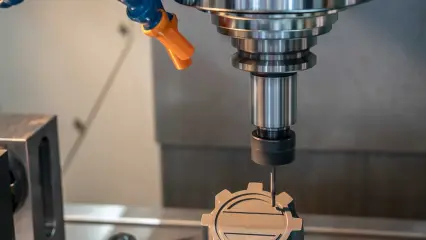
Yes. Formats and CNC parts to print are supplied in the mechanical carbon-graphite family.
Request a quote
If you need to choose between plain carbon-graphite and resin- or antimony-impregnated grades, request a quote or contact us with seal or bushing conditions. A specialist will guide you to the right grade and format.