
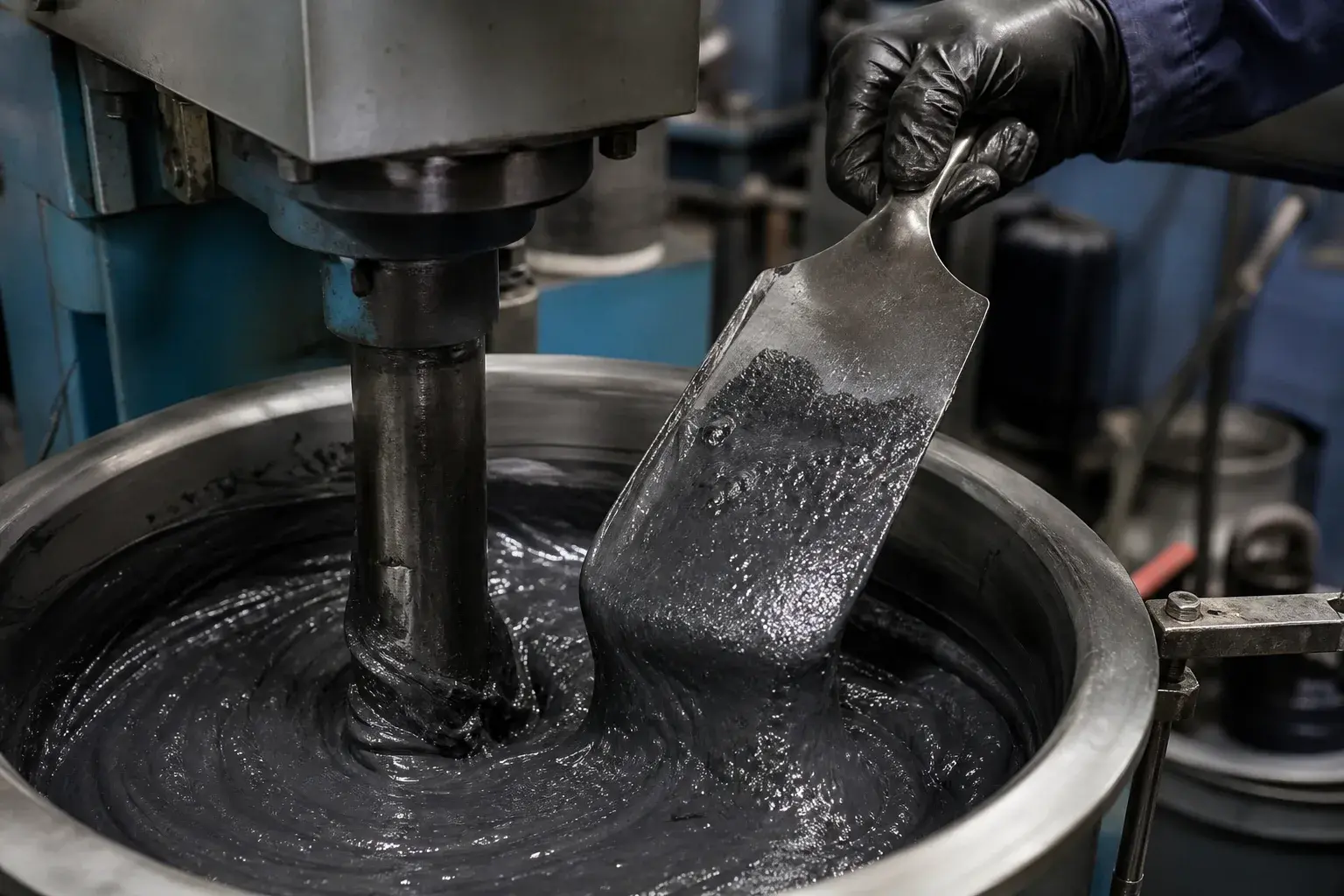
Paint lubricant additive
Friction additive for coatings
Also known as: Graphite as a slip additive · Lubricating filler for paints · Anti-friction additive for coatings · Graphite for low-friction paints
[ Technical summary ]
Adding graphite to a paint formulation modifies the behaviour of the cured film: it lowers the friction coefficient of the surface and improves its resistance to rubbing wear. Unlike a ready-formulated lubricating paint, here graphite is a raw material the formulator integrates into their own system, so selection is by particle size, purity, and ease of dispersion in the carrier used.
[ Problem it solves ]
Give the cured film a slip character and greater rubbing resistance, from the formulation rather than through a later surface treatment.
Operating conditions
- Paint formulation
- Low-friction coatings
When it is suitable
- The cured film shows high friction or surface wear
- The formulation accepts a solid filler without losing properties
- The problem is to be solved in the formulation, not by later treatment
- The additive can be dispersed stably in the carrier
When it may not be suitable
- The formulation requires a light colour or transparency
- The effect cannot be validated with tests on the actual formulation
- The loading required would compromise coating adhesion or hardness
Process challenges
- High friction of the dry film
- Coating surface wear
Advantages
- Reduces film friction
- Improves wear resistance
- Dispersion depending on particle size
Limitations
- Not a hydrodynamic oil lubricant
- May stain light-colored surfaces
- Performance depends on surface preparation and reapplication
[ Critical selection variables ]
These variables define the grade and the geometry. Actual values are confirmed against the grade datasheet.
- Carrier or formulation baseDecisive
- Particle sizeDecisive
- Dosage and application frequencyDecisive
- Film thicknessRelevant
- Substrate or surface to be treatedRelevant
- Required purity and allowable contaminationRelevant
[ Required material properties ]
Properties that guide selection. Numerical values come from each grade's datasheet.
Critical properties
- Friction coefficient
- Particle size distribution
- Self-lubrication
- Dispersibility
Secondary properties
- Wear resistance
- Purity
[ Related ]
Industries
[ Frequently asked questions ]
View all FAQsTechnical content reviewed by ESGRAF — Last reviewed: September 8, 2026
[ Quote ]
Need the right specification—not just material?
Tell us your application. Engineering response in under 24 hours.