Types of industrial lubricants and suspensions made of graphite
Published on 8/20/2020· Updated on 7/22/2026
Graphite lubricants and suspensions provide dry lubrication, thermal resistance, and low dust adhesion. Learn about natural, synthetic types and common industrial applications.

Several types of industrial lubricants with specific characteristics are used today. Graphite lubricants add dry-film lubrication and thermal stability where oil or grease may burn off, contaminate the process, or attract dust.
Graphite is divided into natural and synthetic. Natural graphite is classified as crystalline (flaky and streaky) and amorphous (microcrystalline). The latter is divided into isotropic and pyrolytic. The different types bring different properties to the formula, because of this we can develop products for specific applications.
Types of industrial graphite lubricants
Graphite lubricants bring the qualities of this mineral used in solution. These products reduce friction and prevent premature wear.
Because graphite is self-lubricating by nature, it is used in various forms, from self-lubricating mechanical components to suspensions in oil or graphitized greases.
The following is a description of each of the types of industrial lubricants that you can purchase for your machinery or business:
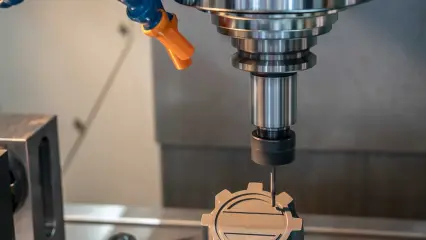
- Solid or mechanical grade graphite has a dry consistency and is of synthetic origin. It is commonly used in mixed friction machines (solid and fluid), to manufacture mechanical components such as bushings or mechanical seals, among other parts. It can work under extreme conditions of pressure and temperature.
- Graphite aerosol lubricant used as an aerosol, micronized graphite particles lubricate the most difficult to reach places. Depending on the application, they achieve high adhesion to surfaces, providing fast and efficient lubrication.
- Liquid, paste or grease graphite lubricants are solutions of aqueous to thick consistency based on water, mineral oil, resins, among others. They are ideal for application as paint, leaving a dry or wet film on the surface. According to the vehicle, they are used in chains and ovens without generating smoke or for the lubrication of dies and machinery in general.
- In powder form it is used directly in fine granulometries as a lubricant for locks or other types of mechanisms.Graphite powders are naturally self-lubricating and the basis of suspensions, pastes and greases.They are also used directly to lubricate grain and cereal silos, as they reduce the coefficient of friction between the seeds and can be easily washed out.
Applications of lubricants according to their origin
Types of industrial lubricants can also be divided based on origin. That is, depending on the type of graphite lubricant they are determines the applications that can be given to each.
- Natural: used to coat pipes, automotive brakes, brushes, electric batteries, food packaging and for paints.
- Synthetics: used to create electrodes, produce steel, create specific parts (conical noses, control blades, blast tubes, among others).
Graphite lubricant solutions for your industry
Graphite by its synthetic or natural nature is a self-lubricating material, whose properties can be used in different ways.
Currently, we can highlight lubricant lines such as:
- GRAFOLAJE
- GRAFICOAT
- LUBRICHAIN
- LUBRISCHAFT
- GRAFOPLATE
- GRAFOTERM
Do not hesitate to contact us to offer you a customized solution. At ESGRAF we have a wide range of applications for graphite in your industry, get to know us!
Request information to our email or click on the link and send a message about the product you are interested in.
Limitations to consider
Performance depends on graphite grade, grain orientation, temperature, load, pressure, speed, and operating environment. Material selection should be confirmed for your actual process conditions.
Information needed for a quote
To guide selection or prepare a quote, ESGRAF typically needs:
- Application and operating conditions (temperature, atmosphere, load).
- Dimensions, technical drawing, or CAD file when applicable.
- Required quantity.
- Requested grade or material currently in use.
- Observed issue with the previous part or lubricant, if any.
Request a quote
Share these details with our team at ESGRAF or request information. A specialist will review your application before recommending a grade or geometry.