Natural carbons: what they are and what they are used for
Published on 10/22/2020· Updated on 7/22/2026
Carbon is one of the most abundant elements on the planet. It is indispensable for the existence of organic living matter and is responsible for approximately 40% of the electrical energy generated. In nature, in its pure state, we can find different types of natural carbons.

These allotropic forms, i.e. molecules of the same element but with a different molecular structure, have specific physical characteristics and properties and are widely used in industrial processes today.
Types of natural coals and their uses
Graphite
To begin with, we have graphite, as one of the most sought-after natural carbons. It is made up of carbon atoms arranged in hexagons with a sheet structure. This particular material has incredible properties and is the most stable form of carbon.
It can be found in pencil lead, it is a good conductor of electricity and is therefore used in batteries and electric motors, and it withstands heat shock well, so it is used to manufacture crucibles and molds.
Due to its lubricating properties, it is used as a dry lubricant, although it can also be found in grease or oil suspensions. It is also used in the manufacture of bearings, seals, pistons, etc.
Diamond
The hardness and melting point of this natural carbon is extremely high. It is considered one of the hardest materials on the planet and, in addition to being found in jewelry, it is used to cut or scratch other types of materials.
It is considered the purest allotropic form of carbon, but its presentation is crystallized. It is not a good conductor of electricity and is transparent.
Hard coal
It is one of the natural coals most commonly used as fuel because it generates little ash, smoke and burns easily. It has an average of 80 to 90% carbon in its structure and is of vegetable origin.
From hard coal, by pyrolysis, coke is obtained and used as a fuel and reducing agent in the smelting of iron ore.
Anthracite
It is a black metamorphic rock that is at least 92% carbon and burns with difficulty. It is often used as a domestic or industrial filtration media that when combined with filter sands rids water of contaminants or debris.
Lignite
It is a black rock with a texture similar to the wood it comes from. It contains 55-75% carbon and is easy to burn. It is widely used in jewelry and decorative objects, but through the process of carbonization and at high pressures jet is obtained.
Turba
It is mainly one of the natural coals, commonly used as fuel and for obtaining organic fertilizers. It contains 50% carbon and is very rich in carbon. It is also used to improve soils in gardening due to its capacity to retain water.
In the case of black peat, it is used for drying whisky ingredients, for example, although it is also used for skin treatment due to its chemical compounds.
On the other hand, artificial coals, which are obtained from coal and residues (animal and vegetable) are wood charcoal, carbon black, sugar charcoal, animal charcoal or coke, a by-product of hard coal.
These are referred to as artificial because they are obtained from the processing of wood, animal bones, hard coal, etc.
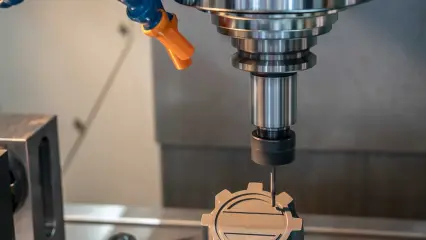
In ESGRAF we develop different presentations, applications and pieces of natural and synthetic graphite or natural carbons to meet the needs of the industry. We handle synthetic graphite for the industry in general, either for EDM processes, mechanical grades, furnaces, bushings, among many other components.
Limitations to consider
Performance depends on graphite grade, grain orientation, temperature, load, pressure, speed, and operating environment. Material selection should be confirmed for your actual process conditions.
Information needed for a quote
To guide selection or prepare a quote, ESGRAF typically needs:
- Application and operating conditions (temperature, atmosphere, load).
- Dimensions, technical drawing, or CAD file when applicable.
- Required quantity.
- Requested grade or material currently in use.
- Observed issue with the previous part or lubricant, if any.
Request a quote
Share these details with our team at ESGRAF or request information. A specialist will review your application before recommending a grade or geometry.