Industrial applications: how graphite is used in different sectors
Published on 3/12/2020· Updated on 7/22/2026
Graphite is a mineral of natural or synthetic origin that has the properties of being soft, stable, odorless and non-toxic. On the other hand, here we list its main benefits.

Today, industrial applications of graphite allow processes to be carried out effectively. For example, in the metallurgical industry, carbon/graphite is added to increase the carbon content and create ferroalloys or steels with different properties. It is also used in components such as pourers and molds for casting and forming parts.
What is graphite?
It is a mineral of natural or synthetic origin that has the properties of being soft, stable, odorless and non-toxic. On the other hand, here we list its main benefits:
- It is resistant to thermal shock
- It has a low coefficient of thermal expansion (3 times lower than copper), which guarantees its stability as a mechanical component.
- It does not melt, it passes directly from the solid to the gaseous state in combination with oxygen. It oxidizes and sublimes into CO2.
- It has high resistivity or electrical conductivity.
- It is resistant to very high temperatures.
What is graphite used for and its industrial applications?
In industrial applications, graphite has different uses: as a lubricant, casting additive, mold release agent, etc. As a lubricant, it generates a film that facilitates sliding between two surfaces.
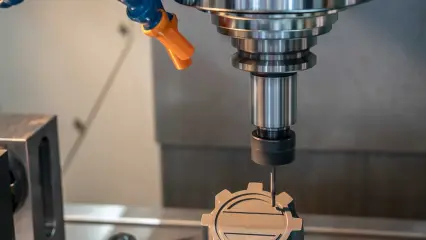
It is important to mention that it is also used in the manufacture of various engineering parts, such as mechanical seals, bushings, plugs, vanes, etc.
In addition, it is the main component of carbon brushes used in electric motors.
Some important industrial applications of graphite include
- Lubricant: it is a solid powder that properly lubricates the brake shoes of train wheels. The lubricity is also exploited in oil, grease and other vehicle suspensions.
- Metallurgy: for the smelting of precious metals, components are used to help in the handling such as pourers, crucibles, molds and others.
- Iron and steel: is added as an additive to molten iron to increase the carbon content and produce high hardness steels, among others.
- Chemicals: used in the manufacture of rubber, explosives and polishes; graphite products are also used as packaging for pipes, stirring bars and other products resistant to chemical attack.
- Electrical: it is a magnificent electrical conductor used for the manufacture of brushes in electric motors and electrical contacts for streetcars, traveling cranes and others.
As you can see, graphite is a very important material that has endless applications and industrial solutions according to the use that each sector needs.
It is important to mention that graphite is a key element in many industries. Since it allows to perform different actions and procedures in an effective way.
The best thing is that it maximizes results at a low cost. Simply put, graphite is an indispensable element in industrial applications!
In ESGRAF we are graphite specialists and we have different presentations and grades in stock for immediate delivery. Also explore the catalog of graphite uses by application or contact us.
Limitations to consider
Performance depends on graphite grade, grain orientation, temperature, load, pressure, speed, and operating environment. Material selection should be confirmed for your actual process conditions.
Information needed for a quote
To guide selection or prepare a quote, ESGRAF typically needs:
- Application and operating conditions (temperature, atmosphere, load).
- Dimensions, technical drawing, or CAD file when applicable.
- Required quantity.
- Requested grade or material currently in use.
- Observed issue with the previous part or lubricant, if any.
Request a quote
Share these details with our team at ESGRAF or request information. A specialist will review your application before recommending a grade or geometry.