Use of graphite in different industries
Published on 10/6/2020· Updated on 7/22/2026
Graphite is one of the allotropic forms of carbon. It is a soft metallic black mineral and due to its properties the use of graphite in different industries is nowadays very common.

Graphite is one of the allotropic forms of carbon. It is a soft mineral of metallic black color and due to its properties the use of graphite in different industries is nowadays very common.
Some of its main characteristics are that it is an excellent electrical conductor or insulator, it has very good chemical resistance, it is a self-lubricating material at high temperatures, etc. For these reasons, graphite is commonly used.
Beyond finding it in the mine of school pencils and all kinds of pencils, graphite became one of the most useful materials and with more advantages for different industries, and its industrial applications came to revolutionize it so far known.
Industries using graphite
In this sense, the use of graphite is an essential part of different industries. Here are some of the most important ones:
- Mobile energy Alkaline batteries use it as a conductive additive in the cathode. Lithium-ion rechargeable batteries use graphite as an anode active ingredient, and in the case of fuel cells, the bipolar plates are usually made of expanded natural graphite sheets.
- Graphite is used in the manufacture of explosives, polishes, rubber, ammunition and fibers. It is also a component in pigments and paints. In the form of packing, it is an important input for sealing pipes and machinery in the chemical industry, as it is resistant to chemical attack by acids and other media.
- It is mainly used in electric motor brushes, gaskets or expanded graphite gaskets for sealing the monoblock, brake pads, etc.
- Lubricants. Functions as a dry lubricant, additive for liquid lubricants, as well as in oil or grease suspensions.
- Metallurgy Probably its most common application is in refractories due to its resistance to corrosion and thermal shock. However, it is also used to manufacture degassing lances, casting molds, channels, weirs, crucibles, etc.).
- They are made from expanded graphite foil and work perfectly in general industry. They resist high temperatures, thermal and chemical shock, as well as exposure to different corrosive materials.
- For furnaces working at high temperatures, graphite felt or carbon felt is widely used as thermal insulation.
Natural graphite is obtained from subway or open-pit mines. It is then crushed and mechanically dried in a horizontal dryer. Once dried, it goes through grinding and purification processes to obtain a high carbon content and reduce impurities for graphite utilization.
Once all the above happened, it is classified and sent to hoppers according to its size to be later packed.
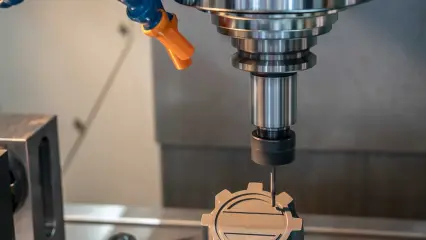
In ESGRAF we handle different presentations for the use of graphite in the industry in general. We offer spare parts, bushings, vacuum pump blades, mechanical seals, injection tubes, sliding plates, crucibles and ingot molds, brushes, braided packing, graphite for glass handling, powdered graphite, graphite for electroerosion, mechanical grade graphite, etc.
Limitations to consider
Performance depends on graphite grade, grain orientation, temperature, load, pressure, speed, and operating environment. Material selection should be confirmed for your actual process conditions.
Information needed for a quote
To guide selection or prepare a quote, ESGRAF typically needs:
- Application and operating conditions (temperature, atmosphere, load).
- Dimensions, technical drawing, or CAD file when applicable.
- Required quantity.
- Requested grade or material currently in use.
- Observed issue with the previous part or lubricant, if any.
Request a quote
Share these details with our team at ESGRAF or request information. A specialist will review your application before recommending a grade or geometry.