Graphite: Properties and characteristics
Published on 1/27/2020· Updated on 7/22/2026
In the current era, graphite has become an indispensable consumable for industries, as it integrates properties that could only be found in metals and at the same time possesses characteristics of non-metallic objects.

In today's age, graphite has become an indispensable consumable for industries, as it integrates properties that could only be found in metals and at the same time possesses characteristics of non-metallic objects. Graphite is the most stable form of carbon, a mineral that maintains low electrical conductivity that increases with temperature, making it a semiconductor. This particularity has caused demand for graphite to increase considerably across technology, steel, metallurgy, and many other sectors.
Characteristics of graphite
Before mentioning the properties of graphite, we must take into account the characteristics that make this mineral remarkable in the industry. The following are the most important ones:
- Refractory
- Easily exfoliates
- Semiconductor
- Natural or synthetic
- Anticorrosive
Properties of graphite
The characteristics and properties of graphite are related and have an impact on the final result when providing a material for a company, favoring all types of productive sectors. The following is a list of graphite properties and a brief explanation of what they are:
- Low coefficient of thermal expansion: This makes it ideal for high temperature applications without expansion.
- High thermal conductivity: Allows rapid heat dissipation or distribution.
- Self-lubricating: The graphite molecular structure allows a lubrication or release effect used in various applications.
- Inert to chemical attack: Low reactivity with acids and chemicals used in industry.
There are many applications of graphite that can be recognized today, we can highlight its participation in the production of paints, pencils, lubricants, electrodes and even as a moderator in nuclear reactors.
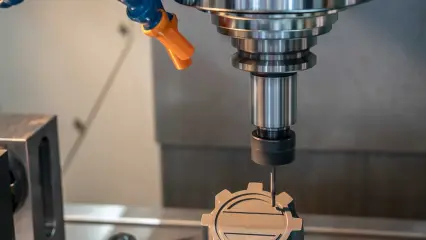
But it is due to the properties of graphite that it is possible to apply it in a hundred forms such as rings, centrifugal pump blades, bushings, stirring bars, casting crucibles for casting processes, brushes, inserts and non-stick supports.
Graphite has become so pervasive in everyday life that it has become indispensable, especially in the industrial sector, which ranges from agriculture, food, electricity, metallurgy, chemicals, transportation, etc.
All these sectors have such specific requirements that they need products designed for the specific application of the end customer, as is the case of liquid lubricants and their anti-pollution vehicles.
For this reason, ESGRAF is not only dedicated to manufacture existing products in the market, but also to continue innovating and producing original elements to satisfy the particularities of multiple industries.
Limitations to consider
Performance depends on graphite grade, grain orientation, temperature, load, pressure, speed, and operating environment. Material selection should be confirmed for your actual process conditions.
Information needed for a quote
To guide selection or prepare a quote, ESGRAF typically needs:
- Application and operating conditions (temperature, atmosphere, load).
- Dimensions, technical drawing, or CAD file when applicable.
- Required quantity.
- Requested grade or material currently in use.
- Observed issue with the previous part or lubricant, if any.
Request a quote
Share these details with our team at ESGRAF or request information. A specialist will review your application before recommending a grade or geometry.