Graphite powder: breaking, milling or micronizing and classification processes
Published on 7/14/2020· Updated on 7/22/2026
Graphite powder has multiple properties, as it is used to improve different processes or increase productivity in several industries. It is important to mention that it is a very complete element.

The graphite powder has multiple properties, since it is used to improve different processes or increase productivity in several industries.
It is important to mention that it is a very complete element, since it has different characteristics such as: a great resistance, it is refractory, excellent conductor of heat and energy, among other things.
Therefore, today we are going to explain the meaning of grinding, what is its process and how to obtain graphite powder
What is grinding?
The mineral grinding, is the process that is performed to crush the graphite particles, it is performed in a rod mill, where the element is impacted to be able to adapt the crushing of the graphite powder, depending on the need. It should be noted that the process can be carried out either by drying or by flotation.
The main objective of drying is to remove the moisture from the amorphous graphite in a mechanical way, and it is achieved thanks to the machinery called horizontal dryer.
Flotation has the objective of separating all the impurities from the graphite to obtain an element of higher quality and/or purity.
After either of these two processes, sorting must be carried out. To do this, the task can be done through:
- Micronizingor micronizing. This is the process where crystalline natural graphite grains are fed into micronizing mills. Through a rotor rotating at a high speed, the element moves up and down the fan. To obtain a high level of graphite, which varies according to what is required. Through filtering, another size of graphite particles is also obtained, with specific properties and suitable for other needs.
This process can be applied to natural and synthetic graphite. It should be noted that there are different machinery to achieve the grinding of the element and obtain the graphite powder
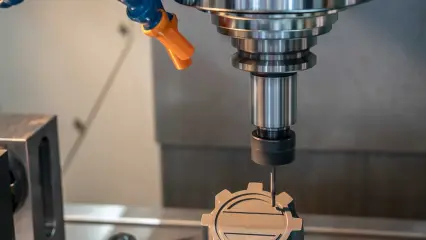
Machinery that generates graphite powder
- Graphite breakers: this is a machinery used in several industries, but mainly in mining, because its function is to separate the rocks or elements where graphite is found.
- Graphite packers: its function is to make graphite flexible, to expand it according to specifications and then compact it under certain pressure, thus achieving a high purity element.
- Graphite hammer mills: they have a specific type of grinding and classifier, which helps you to satisfy the highest demands in graphite grains; because it creates very fine grains, thanks to the speed of the rotor that sends the element to the classifier.
- Graphite jet stream: is a high pressure machine, which cleans the element, to make it as pure as possible.
It is important to emphasize that these machines must have the highest quality, in order to generate the appropriate processes for each need. Therefore, ESGRAF is a company specialized in graphite, which has the best equipment for micronizing and classification according to each size; so that it can deliver the best product that exists in the market.
Conclusions
By understanding what grinding means, you understand the process that is generated to obtain graphite powder and with it, how it adapts to the highest customer demands.
Limitations to consider
Performance depends on graphite grade, grain orientation, temperature, load, pressure, speed, and operating environment. Material selection should be confirmed for your actual process conditions.
Information needed for a quote
To guide selection or prepare a quote, ESGRAF typically needs:
- Application and operating conditions (temperature, atmosphere, load).
- Dimensions, technical drawing, or CAD file when applicable.
- Required quantity.
- Requested grade or material currently in use.
- Observed issue with the previous part or lubricant, if any.
Request a quote
Share these details with our team at ESGRAF or request information. A specialist will review your application before recommending a grade or geometry.